Upcycling is our superpower
Upcycled protein and fibre is produced from existing food crops or food-grade agricultural side-streams that would otherwise be underutilised, wasted, or downgraded in value.
#1 We use food-grade brassica crops already grown for human consumption.
#2 We recover nutritional value (protein, fibre, micronutrients) from parts of the crop that are typically left in the field or diverted to low-value uses.
#3 We apply mechanical and physical processing, not genetic modification or synthetic biology.
#4 Consumer acceptance risk is significantly lower as they already understand and accept vegetables, particularly broccoli, as a nutritious fibre-rich food.
Adopting upcycled protein and fibre allows manufacturers to improve nutrition, reduce cost pressure, and cut Scope 3 emissions without changing consumer expectations or regulatory pathways.
As a result, we can deliver a deployable, scalable ingredient solution that is available now and designed for fast QA onboarding. Crucially, bringing together the 'technology stack' to integrate the supply chain gives defensibility of pricing and margins, and in an industry under huge economic pressures "commercial first, innovation second" is often the reality.
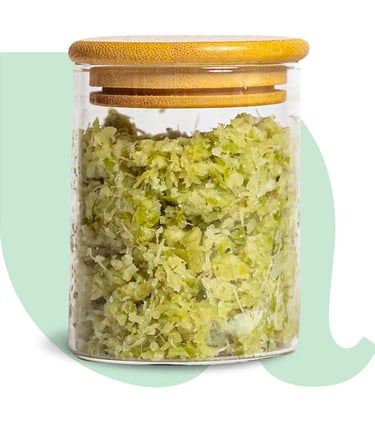
Functional unit: 1 kg ingredient
Boundary: Cradle-to-gate
Result: <0.25 kg CO₂e/kg
Assessor: UK Agri-Tech Centre (independent)
Status: Interim, to be refreshed post-BRCGS
Exclusions: methane avoidance, end-of-life
An independent LCA evidences the positive environmental impact
From a food manufacturer’s perspective, upcycled protein behaves like a conventional plant ingredient but - with a lower environmental footprint and greater resource efficiency
In upcycling, supply chain and cost risk are easier to manage as there is no dependence on bespoke fermentation capacity or sterile environments, no exposure to exotic feedstocks or inputs, and the scaling economics are more predictable.
Significantly:
Upcycled protein is not lab-grown or cell-cultured
Upcycled protein is not genetically modified
Upcycled protein does not require any novel organisms
Upcycled protein is not a synthetic or chemically engineered protein
The greater regulatory certainty of upcycled protein relative to "frontier Alt-protein" allows shorter qualification timelines, standard supplier approval processes (HACCP, BRCGS), specifications and fewer unknowns when scaling across regions.
Crucially upcycled proteins are not gated by binary regulatory outcomes which can have long and variable approval cycles. As a result, we offer a deployable, scalable ingredient solution that is available now. Upcycling is the fastest way to put sustainable protein and fibre into existing products with the lowest label risk.
Get in touch
© 2026. All rights reserved.
Upcycled Plant Power ('UPP') Limited
trading as "UPP" and "Freya"
Company number: 14171122
VAT Number: 428 2222 17
Registered address:
Agri-Tech Centre
Poultry Drive, Edgmond,
Newport, Shropshire
United Kingdom TF10 8JZ
Connect with us
Broccoli is a natural source of vitamin K and contains folate, potassium and beta-carotene, a provitamin A carotenoid. Our Fiba and Prota products are a source of fibre, making them nutritionally valuable ingredients.