Fresh Insights in Sustainable Food & AgTech
Discover the ideas, people, and practices growing a healthier food future.


Why low-friction reformulation is now a strategic imperative for food producers


The most advanced taste tool we have is still a Chef


Yuka: The Reformulation Pressure Food Producers Didn’t Vote For

The Fibre Factor: Why the Fibre Gap Is a System Design Problem
Upcycling as Infrastructure: Why UPP Joined the Upcycled Food Association

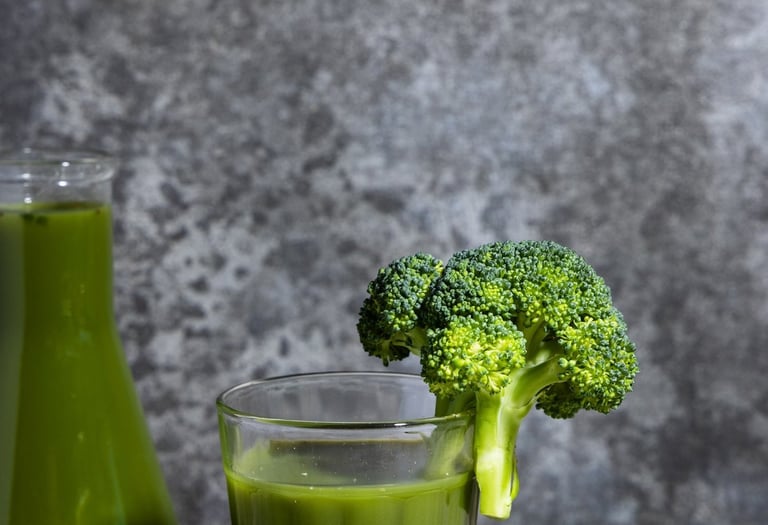
Feeding the next phase of food: What GLP-1s reveal about nutrition, not medication

The Cocopopification of Food (and Why Fighting the Industry Won’t Fix It)
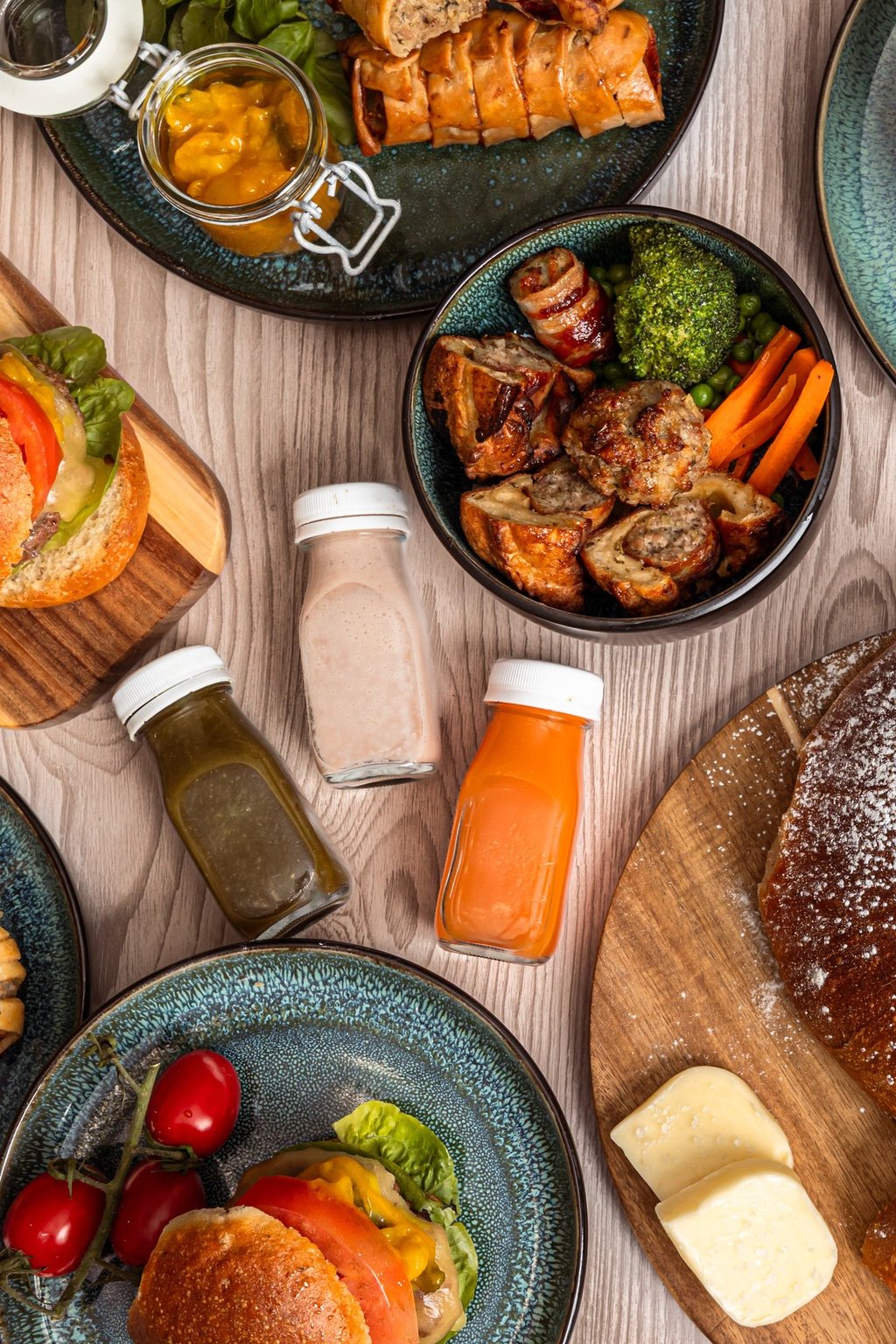
Fork From Farm: Designing Food Around What People Need
If people won’t change their diet to save their lives, why would they change it to save the planet?


Clean ingredients that sound natural - and why that suddenly matters again
A World Without Cows: What happens when we optimise the wrong variable?


Smart hybridisation: How to scale impact before you scale volume
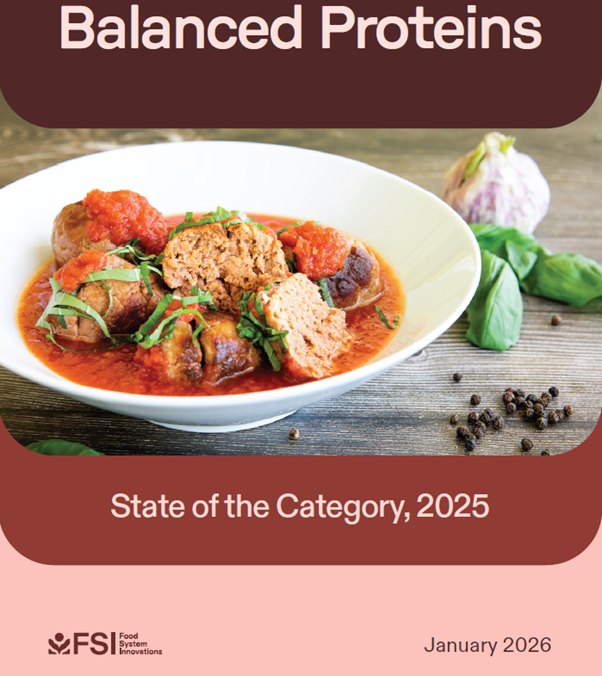
Balanced Proteins: Quiet Scale Beats Loud Disruption


Ingredient stacking: the fastest route to lower-carbon food that still tastes like food
Make Sustainability a By-Product of Efficiency: How Smarter Food Systems Outpace Traditional “Green” Narratives


Europe after peak: why the next era of food is about nutrition density, not volume
The system isn’t broken. It’s optimised.


7 Rules for Integrating Sustainable Protein Ingredients at Industrial Scale



The Cocopopification of Food (and Why Fighting the Industry Won’t Fix It)
There’s a feeling many consumers share, even if they don’t have the words for it. Food has become… cartoonish. Too sweet. Too smooth. Too engineered. Too loud. Too moreish. Too far from anything you’d recognise in a kitchen.
It’s the "cocopopification" of food: products designed to be hyper-palatable, hyper-convenient, and hyper-repeatable — optimised less for nourishment and more for throughput.
And it’s triggered a backlash.
The book Ultra-Processed People didn’t create the concern — it simply gave it a clear narrative:: "something about the modern diet feels wrong." And people aren’t imagining it.
Should we only eat unprocessed food? No.
That idea sounds clean, but it collapses the moment it meets reality.
Because “only unprocessed” assumes a world where everyone has:
time to cook from scratch every day
stable income and access to fresh ingredients
predictable schedules
equipment, skills, and energy
low stress and high capacity
That is not most people’s life.
It’s not how modern societies work.
Processed food exists for a reason: it made food safer, cheaper, more available, more stable, and more consistent. It reduced hunger. It extended shelf life. It supported working households. It enabled scale.
The mistake isn’t that food is processed.
The mistake is that processing became a proxy for quality.
And then the system got too good at optimising for the wrong thing.
Should we have better food?
Definitely. But “better” doesn’t mean nostalgic.
It means upgraded.
Better food is food that fits modern life and delivers what bodies actually need:
more nutrition density
more fibre
better satiety
fewer empty calories
fewer unnecessary functional crutches
ingredients that behave like food, not chemistry
Better food is not a return to the past.
It’s a redesign of the default.
Can we get there without working with the industry?
Impossible.
Because the industry is the system.
And the system is how food reaches people.
It’s easy to imagine that the solution is to “beat Big Food” — to replace it, shame it, regulate it into submission, or boycott it into collapse.
But that approach misunderstands something important:
food at scale doesn’t change through moral pressure alone.
It changes through supply chains, specifications, manufacturing realities, retailer requirements, cost constraints, and consumer repeat purchase.
It changes when the people inside the system have better tools.
And here’s the uncomfortable truth: The people inside the industry eat the same food we do.
They are not a separate species. They are parents buying dinner. They are commuters grabbing lunch. They are shoppers managing budgets. They are humans with the same constraints and cravings.
The idea that the industry is a villain, and consumers are the victims, makes for a satisfying story. But it doesn’t build a better food environment.
The story of modern food is also the story of progress
Look at the UK over the last century.
From 1900 through to around 2011, life expectancy rose markedly — with temporary shocks during wars and pandemics. Multiple forces drove that improvement: public health measures, medical advances, and better living conditions.
But food played a role too.
Improved food security.
More reliable calories.
More consistent nutrition.
Less seasonal hunger.
Safer supply.
The system delivered.
And that matters, because it’s easy to criticise the modern food environment without acknowledging what it replaced.
But now the optimisation target has shifted.
The problem today isn’t scarcity.
It’s abundance — in the wrong direction.
And more recently, rising obesity and chronic disease risk linked to diet and inactivity threaten to slow progress, especially in healthy life expectancy.
So if we want continued gains, something has to change.
Not in theory.
In the everyday food environment people actually live in.
The modern food environment is shaping outcomes by default
Most people don’t fail at nutrition because they lack willpower.
They fail because the environment is doing what it was designed to do:
cheap calories are everywhere
ultra-convenient formats dominate
products are engineered for repeat purchase
the easiest option is rarely the best one
“healthier” often costs more or tastes worse
So the system produces predictable outcomes.
And then we blame individuals for responding normally.
That’s not a health strategy.
That’s a design failure.
The solution isn’t to reject the system. It’s to transform it.
If you want a healthier population, you need healthier defaults.
Not niche alternatives for the already motivated.
That means changing what happens inside the categories people already buy:
ready meals
sauces
bakery
snacks
kids’ food
everyday staples
It mens improving the inputs, not just preaching about the outputs. And it means working with manufacturers — because manufacturers control the levers of scale:
formulation
cost-in-use
texture and taste
shelf life
labelling
procurement
production realities
This is not glamorous work. But it’s the only work that scales.
A new goal: keep the convenience, upgrade the nutrition
The future isn’t “everyone eats whole foods all the time.”
The future is that the convenient foods people already rely on become:
more nutritious
less empty
less dependent on ultra-processing tricks
more aligned with long-term health
Not through disruption.
Through upgrade paths.
Small improvements repeated across high-volume products become population-level change.
That’s the game.
What we’re doing at UPP
At UPP, we’re not trying to tear the system down.
We’re trying to make it better at what it already does: feed people at scale.
That means working upstream - turning under-utilised vegetables into functional ingredients that can be used in real manufacturing to improve food from the inside out.
Not as a “health product.”
Not as a premium niche.
As an ingredient-level upgrade that fits the realities of modern food:
affordability
safety
scale
consistency
compatibility
Because beating the industry isn’t the answer.
Helping the system transform is the answer.
And that is what we are doing.
Closing thought
The cocopopification of food didn’t happen by accident.
It happened because the system was optimised for what it was rewarded for.
Now the rewards are changing.
And if we want the next century of progress - not just in life expectancy, but in healthy life expectancy - we need the modern food environment to change too.
Not by wishing processing away.
But by making processed food worthy of the role it plays.
Clean ingredients that sound natural - and why that suddenly matters again
For years, the food industry has treated “clean label” as a marketing problem.
Remove an E-number.
Use "store cupboard ingredients"
Reduce the length of ingredient declarations on back of pack.
What’s changed recently is not the existence of processed food - it’s the level of public scrutiny around how food is processed, why, and whether the trade-offs are still justified. The debate has re-entered the mainstream.
From Joe Wicks: Food for Fitness to the success of Chris van Tulleken’s “Ultra-Processed People”, consumers are being exposed - often for the first time - to the idea that not all processing is equal, and that formulation decisions made far upstream can shape health, trust, and perception downstream.
For food producers, this creates a familiar tension.
The system still needs processed food.
Scale still requires consistency, safety, and shelf life.
Cost pressure has not gone away.
But the tolerance for ingredients that sound synthetic, opaque, or unnecessary is narrowing. And that matters — not because of ideology, but because perception now influences risk.
The quiet return of ingredient scrutiny
What’s striking about the current moment is how little it resembles previous “clean eating” cycles. This is not about superfoods or exclusion diets.
It is about processing logic.
Both the documentary and the book focus less on individual nutrients, and more on the architecture of modern food: fractionation, recombination, texture engineering, and the substitution of whole-food function with isolated additives.
That framing resonates because it aligns with something food manufacturers already know internally: Many formulation decisions were made to solve industrial constraints - not nutritional ones.
Those decisions made sense at the time. But some of their side-effects are now visible to consumers in a way they weren’t before.
Why “natural-sounding” ingredients are not about optics
There’s a temptation to treat this moment as a communications challenge.
Change the language.
Control the narrative.
Re-educate the consumer.
That approach misses the point.
What consumers are responding to is not branding — it’s credibility. Ingredients that sound natural tend to share three characteristics:
They originate from recognisable crops or processes
They perform multiple functions, rather than replacing each one with a separate additive
They can be explained without a chemistry lesson
This is not nostalgia. It’s cognitive load. When ingredient lists become shorter and more intuitive, trust increases - even if the product remains processed.
Processing is not the enemy - fragmentation is
One of the most unhelpful conclusions drawn from the “ultra-processed” debate is that processing itself is the problem. It isn’t.
Processing is what allows food to be safe, affordable, and widely available.
The issue is how fragmented processing has become.
Over time, many foods have been deconstructed into ever more specialised inputs -stabilisers, emulsifiers, texturisers, isolates - each solving a narrow technical problem, often sourced from different global supply chains. The result is food that works industrially, but looks and feels increasingly abstract to the people eating it.
Reversing that trend does not require abandoning processing. It requires re-integrating function.
When one ingredient can do the work of many
From a formulation perspective, the most powerful ingredients today are not the most novel. They are the ones that:
deliver protein, fibre, and functionality together
replace multiple additives with a single crop-derived input
integrate into existing processes without re-engineering lines
arrive with procurement-grade traceability and allergen clarity
This is where “clean” stops being about purity and starts being about efficiency - fewer ingredients, fewer suppliers, fewer explanations.
For manufacturers under pressure to reduce cost, risk, and Scope 3 emissions simultaneously, this matters more than philosophy.
Clean labels as a by-product of better system design
The most scalable changes in food rarely happen because consumers demand them explicitly. They happen because producers redesign systems in ways that quietly remove friction.
When ingredients are:
derived from familiar crops
processed through transparent, auditable systems
supplied regionally rather than globally
used to replace several additives at once
the label improves as a side-effect.
Not because anyone set out to chase a claim — but because the system became simpler.
That distinction is important.
Why this matters now - commercially, not culturally
The current focus on ultra-processing will not last forever. But its effects on risk perception, retailer scrutiny, and regulatory attention already matter. For food producers, the question is not whether to respond – it is how.
High-friction reformulation in response to public pressure often creates more problems than it solves.
Low-friction reformulation - using ingredients that behave like food, sound like food, and come from food - creates optionality.
It allows producers to:
simplify labels without compromising performance
reduce additive dependency without redesigning factories
respond to current media pressure without chasing trends
future-proof portfolios against shifting definitions of “acceptable” processing
That is not a consumer strategy. It is a resilience strategy.
Closing thought: familiarity scales faster than novelty
The food system does not need to swing from hyper-processed to idealised whole foods. It needs better integration between agriculture, processing, and formulation - so that ingredients once again look and feel like they belong in food.
In a world where scrutiny is rising but tolerance for disruption is low, the safest path forward is not to fight processing - but to make it quieter, simpler, and easier to explain.
Clean ingredients that sound natural are not about going backwards. They are about rebuilding trust - one formulation decision at a time.
Read more here.
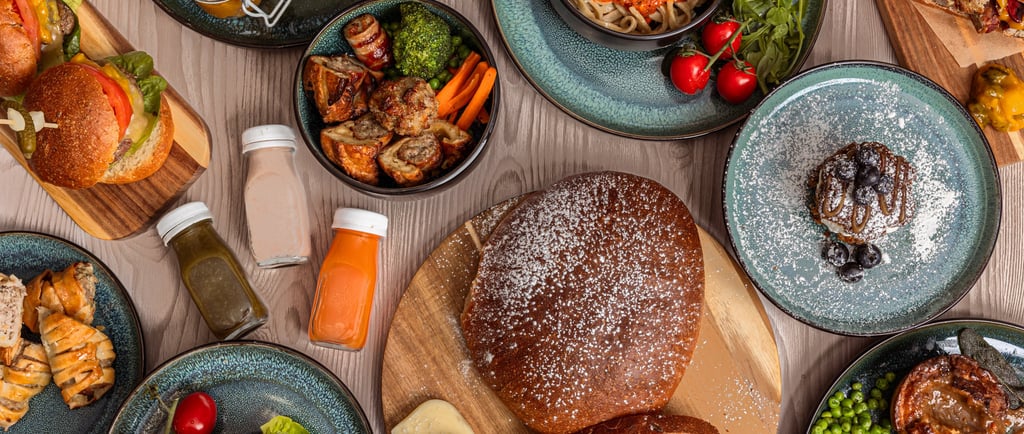
Fork From Farm: Designing Food Around What People Need
Grow it. Process it. Package it. Sell it. Eat it.
It’s a neat story. It sounds logical. It sounds efficient.
But it hides a fundamental flaw:
It starts in the wrong place.
Because the farm doesn’t exist to express its own potential. It exists to feed people. And people don’t buy crops.
They buy outcomes.
They buy dinner.
They buy convenience.
They buy familiarity.
They buy nutrition (even when they don’t call it that).
They buy something that fits their life, their budget, and their taste expectations.
So if we want to build a better food system, we need to invert the logic.
Not farm to fork...Fork from farm.
Start with what people need — then work backwards.
The fork is the specification
In most industries, product design begins with the user.
Food is one of the few sectors where we often pretend the opposite is true.
We treat supply as destiny:
“This is what we grow.”
“This is what we harvest.”
“This is what we can process.”
“So this is what people will eat.”
But consumers don’t eat what exists....They eat what works.
And “works” is a demanding brief:
it has to taste good
it has to feel right
it has to be affordable
it has to fit into habits
it has to be safe
it has to be available consistently
it has to deliver real nutrition in familiar formats
That’s the fork...That’s the spec.
And when you start there, you stop building food systems around what’s easiest to produce — and start building them around what’s actually needed.
The real problem isn’t waste. It’s under-utilisation.
Waste is usually framed as a moral failure.
Something is thrown away. Something is “lost.” Something is “not valued.”
But that framing misses the point.
In modern food systems, waste is often just a symptom of something more structural: We’ve built supply chains that can’t fully use what already exists.
Not because the material isn’t good. But because it doesn’t fit the system:
wrong format
wrong size
wrong spec
wrong shelf-life
wrong processing behaviour
wrong economics
wrong route to market
The issue isn’t that food is wasted....It’s that it’s not engineered into value. And that’s a solvable problem.
At UPP, we focus on a different question: How do we fully utilise what we already grow — and turn more of it into food people actually want to eat?
Not as a side project.
As the core design principle.
Fork from farm changes the optimisation target
Most food systems have been optimised around three things: cost, safety, and scale.
That optimisation delivered real progress.
It made food affordable. It made food safe. It made food reliable.
But now the brief has expanded.
The system is being asked to deliver more:
higher nutrition density
more resilience
more supply security
more efficiency
more stable economics for farmers
and fewer trade-offs
The old approach tries to solve this by adding more complexity.
New ingredients. New supply chains. New consumer behaviours. New formats.
But complexity doesn’t scale cleanly in food.
The better approach is to upgrade the system we already have.
And that starts by rethinking directionality.
What happens when you build backwards from the consumer?
When you design from the fork backwards, three things become possible at once.
1) National food security improves: Food security isn’t just about growing more. It’s about converting more of what we already grow into stable, saleable, nutritious food. If a country can take a higher percentage of its domestic crops and turn them into:
consistent ingredients
predictable inputs for manufacturing
scalable products people actually buy
…then the system becomes less exposed to shocks.
Less dependency.
Less volatility.
More resilience.
Food security is often treated as a geopolitical issue. But a lot of it is simply an engineering issue: How efficiently can you convert what exists into food that fits demand?
2) Consumers get more nutritious food - without needing to change:. There’s a persistent myth in food innovation that better nutrition requires better behaviour. That if we want healthier outcomes, consumers need to:
cook more
read labels
change habits
“make better choices”
Sometimes they will. But at population scale, behaviour change is a weak lever.
The high-impact route is the opposite: Keep the products. Upgrade the inputs.
That means nutrition delivered through the formats people already buy and trust.
More fibre.
More micronutrients.
More functionality from real ingredients.
Not as a new category. As an upgrade path.
That’s how change compounds.
3) Farmers become more financially sustainable. Farm economics don’t collapse because farmers aren’t productive. They collapse because value capture is thin - and too much of what’s grown is trapped in low-value channels. When utilisation is low, margin disappears into:
grading and rejection
price compression
commodity exposure
limited end markets
low flexibility in what can be sold
But when you can convert more of what is grown into ingredients that manufacturers can actually use - at scale - something shifts.
The farmer stops being a price-taker for a narrow output.
And starts being part of a system that creates value from a broader slice of the crop.
That’s not charity.
That’s better system design.
This is what UPP is building: utilisation as a strategy
At UPP, we don’t see ourselves as a “waste solution.”
Waste is the headline.
Utilisation is the mechanism.
We take vegetables that are under-utilised — not because they’re undesirable, but because they’re hard to integrate — and we turn them into ingredients that work inside real manufacturing.
That means designing for:
spec consistency
supply reliability
manufacturability
nutritional value
compatibility with existing formats
and commercial reality
Not reinvention. Upgrade.
Because the system doesn’t need a lecture. It needs tools.
A better question than “what are we wasting?”
The traditional sustainability conversation starts with guilt: “How much are we wasting?”
The better conversation starts with design: "How much of what we already grow can we turn into food that people actually need?"
That shift matters.
Because it doesn’t just reduce waste. It increases:
food security
nutrition access
farm resilience
manufacturing efficiency
and the ability to scale change without breaking the system
That’s fork from farm.
Not a slogan.
A direction of travel that actually works. And that is what we at UPP are delivering.
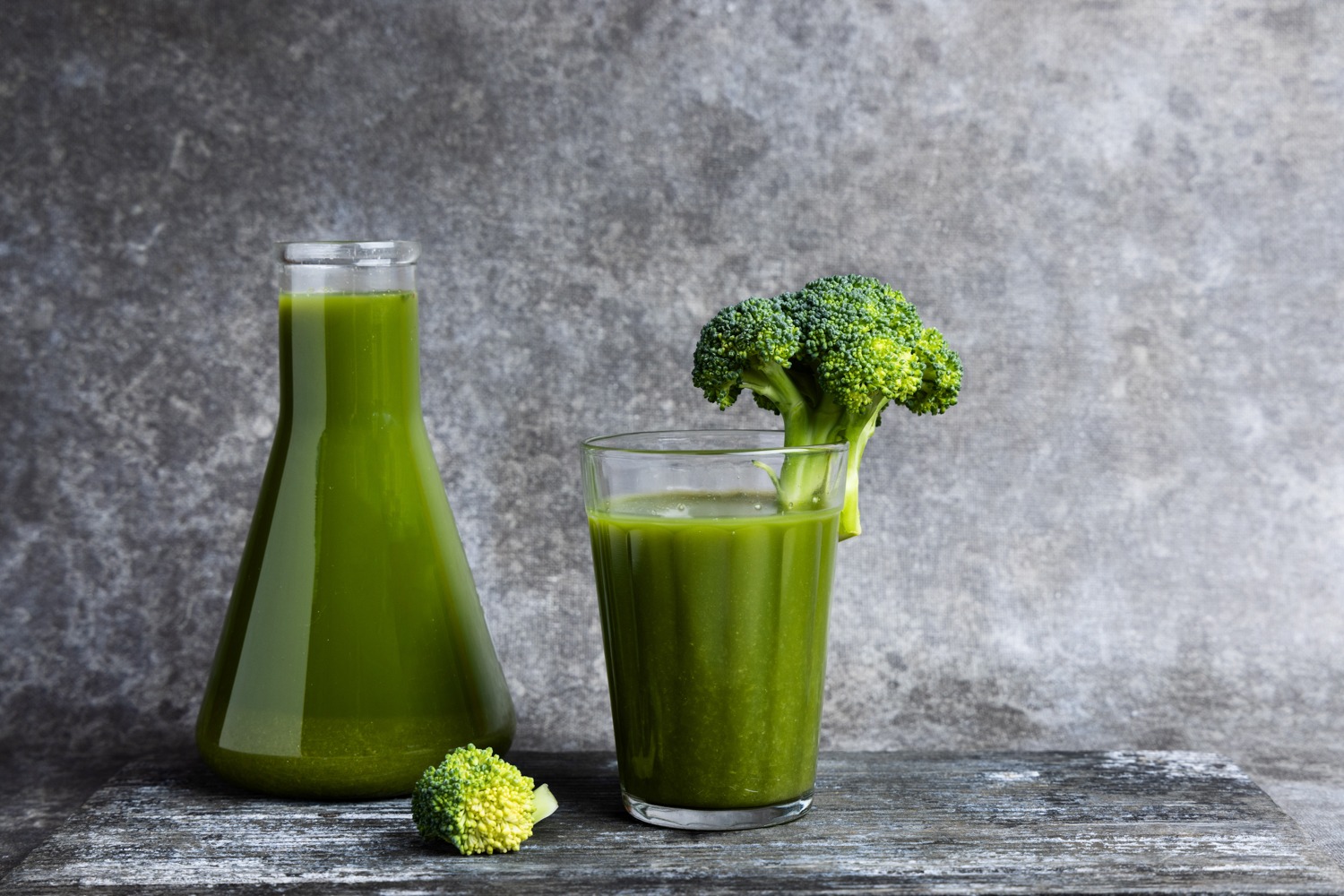
Feeding the next phase of food: What GLP-1s reveal about nutrition, not medication
GLP-1 medications are changing how people eat - whether the food system is ready or not. Drugs like Ozempic and Wegovy are often discussed through the lens of weight loss or healthcare costs. But from a food systems perspective, they reveal something more fundamental: how poorly aligned much of today’s food supply is with the way people actually need to eat.
Reduced appetite.
Smaller portions.
Higher sensitivity to texture and satiety.
When people eat less, what they eat matters more.
This isn’t a niche issue. As GLP-1 use expands - and as many consumers eventually taper or come off medication - the demand for foods that are nutrient-dense, gentle on digestion, and affordable will only grow.
The opportunity is not to medicalise food.
It is to make food do its job better.
Smaller meals expose a big problem
For decades, food formulation has optimised for:
volume
palatability
cost per calorie
That model works when consumption is high. It breaks down when it isn’t.
When people eat smaller portions - whether due to GLP-1s, ageing populations, or shifting health priorities - foods that are:
low in fibre
low in protein
highly fractionated
nutritionally diluted
stop making sense.
The next phase of consumer food is not about eating less food. It is about eating more nutrition per bite.
Broccoli is a nutritional outlier - not a trend ingredient
Broccoli is not fashionable.
It is not novel.
It does not need a story.
It is, however, unusually dense in:
fibre
protein (relative to vegetables)
micronutrients
bioactive compounds
And yet, a significant proportion of the broccoli grown in Europe and the UK never enters the food system at all.
Leaves, stems, and surplus florets are routinely left in fields or diverted to low-value pathways - not because they lack nutrition, but because the system is not designed to use them. That is where opportunity lives.
Nutrition density without asking consumers to “try harder”
One of the persistent mistakes in food innovation is assuming that better nutrition requires:
behaviour change
premium pricing
unfamiliar ingredients
In reality, most consumers — including those on or coming off GLP-1 medication — want food that is:
familiar
affordable
easy to tolerate
quietly more nutritious
Broccoli-derived ingredients offer exactly that.
When converted into functional protein and fibre ingredients, they can:
increase satiety in smaller portions
support digestive tolerance
deliver nutrition without heaviness
integrate into existing food formats
No new habits required.
Coming off GLP-1s: where food matters most
Much of the public conversation focuses on starting GLP-1s. Less attention is paid to what happens after.
As people reduce or discontinue medication, food becomes the primary stabilising force:
maintaining satiety
supporting metabolic health
preventing rebound through nutrition, not restriction
This is where nutrient density beats calorie control. Foods that deliver protein and fibre together - in familiar, everyday formats - help bridge the gap between medical intervention and long-term eating patterns.
Not as “diet food”.
As better food.
Why affordability determines whether this scales
Nutrition that only works at a premium price point doesn’t scale.
At UPP, our focus is not on extracting novelty from broccoli - it is on extracting value from what is already grown and wasted.
By using under-utilised broccoli biomass:
farmers gain a new income stream
ingredients are lower cost than many imported alternatives
manufacturers improve margins rather than sacrificing them
consumers access better nutrition without paying more
That matters — because GLP-1 use is not limited to affluent consumers, and neither is the need for nutritious food.
System change, not product theatre
The most important shift here is upstream.
Instead of designing products around consumer willpower, the system can:
reformulate existing foods to be more nutrient-dense
improve satiety without increasing portion size
reduce reliance on globally sourced isolates
quietly align food with emerging consumption patterns
This is low-friction change — the kind that actually reaches scale.
Broccoli as infrastructure, not a hero ingredient
UPP does not position broccoli as a superfood or a solution in isolation. We treat it as infrastructure:
a crop already grown at scale
with nutrition already proven
currently under-utilised due to system inefficiency
By turning wasted broccoli into functional food ingredients, we connect:
agriculture
processing
formulation
and health outcomes
Without asking consumers to think about any of it.
A food system ready for what’s next
GLP-1s didn’t create the need for better food. They exposed it.
As people eat less - by choice, by health, or by circumstance — the food system has to respond with:
higher nutritional yield
better use of what we already grow
and economics that work for everyone involved
Broccoli isn’t the future because it’s new.
It’s the future because it’s already here — and we haven’t been using it properly.
Better for farmers.
Better for producers.
Better for people.
Better for the planet.
That’s not a dietary philosophy.
It’s a systems outcome.
Read more here.

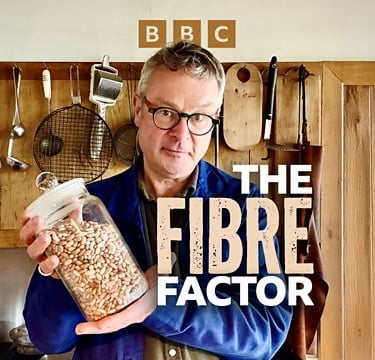
The Fibre Factor: Why “eat more fibre” won’t scale unless we change how food is made
Fibre is having a moment.
Not in the way protein did - with a thousand new SKUs and a marketing arms race — but in a quieter, more structural way. It’s re-entering the mainstream conversation as something we’ve lost, something we need, and something modern diets are failing to deliver.
The BBC series The Fibre Factor (BBC Radio 4 - The Fibre Factor), presented by Hugh Fearnley-Whittingstall, captures that shift well. Across five episodes - from Munching Plants to Manufacturing through to fibre fortification, beans, and “fibremaxxing” - it asks a simple question with uncomfortable implications:
If fibre is so foundational to health, why are we eating so little of it?
The answer isn’t ignorance. It’s system design.
We didn’t “forget” fibre. We engineered it out.
The first episode’s historical arc is useful because it reframes fibre not as a new discovery, but as a baseline that modern food quietly moved away from.
For most of human history, diets were structurally fibre-rich because they were built around whole plants: roots, leaves, seeds, legumes. Fibre wasn’t a target. It was a default.
Then industrialisation did what industrialisation always does: it optimised for throughput, shelf life, uniformity and cost. And in the process, fibre became collateral damage.
Refining grains removes bran. Fractionating plants separates function. Ultra-processing turns whole food architecture into inputs and additives.
Nobody set out to create a low-fibre world. It’s simply what happens when you optimise food for industrial efficiency without simultaneously optimising for nutritional outcomes.
“Fibremaxxing” is a signal — but behaviour change is still a weak lever
Episode 2 introduces “fibremaxxing”, the online trend pushing people to deliberately chase fibre targets the way they once chased protein.
That’s interesting - not because trends solve systemic problems, but because they reveal a rising demand for tools people can act on. The public is looking for a new anchor: not restriction, not purity, but something measurable that maps to health.
But even if fibremaxxing is here to stay, it won’t close the gap at population scale.
Most people won’t track fibre long-term. They won’t weigh beans, count grams, or redesign their meals every day. Not because they’re lazy, but because food decisions sit inside real constraints: time, budget, habit, family preferences, and what’s available. This is why behaviour change remains unreliable as a primary strategy.
If we want fibre intake to rise meaningfully, it has to happen upstream — through how everyday food is formulated.
The real question isn’t “can we eat more fibre?” It’s “can we build fibre back into defaults?”
Episode 3 goes directly to the core issue: the foods that dominate modern diets — bread, pasta, rice, packaged meals — are often fibre-poor by design. So the problem isn’t solved by telling people to eat like nutritionists.
It’s solved by improving the foods people already buy.
This is where the industry’s next phase becomes clear:
Can we fortify staples without compromising taste and texture?
Can ultra-processed foods ever become fibre-rich?
Can we do it without raising cost, breaking supply chains, or adding ingredient-list complexity?
These aren’t consumer questions. They’re manufacturing questions.
And they point to the same conclusion we keep coming back to: low-friction reformulation is the only approach that scales.
Because reformulation doesn’t fail due to lack of ambition. It fails due to friction: process disruption, sensory risk, procurement uncertainty, and complexity that slows decision-making.
Beans are the obvious answer — and the hardest one to mainstream
Episode 4 focuses on beans and pulses, and it’s hard to argue with the case: beans are fibre-rich, affordable, nutritionally dense, and comparatively low-impact.
They are also, in the UK at least, under-consumed outside a narrow set of formats (the baked bean exception is telling).
This is a classic example of a food that makes perfect sense on paper but struggles in practice. Not because beans are “bad”, but because the system around them isn’t built to make them effortless.
You can’t scale fibre by asking the whole population to suddenly love lentils.
You scale fibre by embedding it into familiar formats — the foods people already eat — without requiring a cultural conversion.
The future of fibre is not a new diet. It’s better formulation.
By the final episode, the series moves toward solutions: activism, education, cooking, and community-level change.
All of that matters. But the biggest lever still sits upstream.
If the UK is serious about addressing obesity and diet-related disease, fibre has to stop being a personal responsibility and start becoming a system outcome.
That means ingredients and processes that make it easier for manufacturers to:
increase fibre content without wrecking sensory performance
simplify formulations rather than “add another additive”
keep products affordable
work inside existing lines and supply chains
This is exactly why fibre is not just a nutrition story. It’s an ingredient infrastructure story.
At UPP, we think about fibre the same way we think about protein and sustainability: not as a claim, but as a design constraint. The question is never “how do we convince people to eat differently?”
It’s “how do we improve everyday food without asking people to try harder?”
Because when you change what goes into food — quietly, at scale — you change what comes out of the system.
And that’s how fibre stops being a trend, and becomes a default again.


Why low-friction reformulation is now a strategic imperative for food producers
For much of the past decade, reformulation has been framed as a question of innovation.
New ingredients.
New processes.
New claims.
In practice, however, reformulation rarely fails because food producers lack ambition. It fails because it introduces too much friction into systems that are already under pressure.
Today’s manufacturers are balancing cost volatility, labour constraints, Scope 3 emissions targets, retailer scrutiny, and increasingly conservative capital environments - all while maintaining taste, texture, safety, and margin. In that context, the most valuable ingredient innovations are not those that promise transformation, but those that enable change without disruption.
Low-friction reformulation is no longer a “nice to have”. It is becoming a strategic requirement.
The hidden cost of reformulation friction
Every reformulation introduces risk - but not all risks are equal.
High-friction reformulation typically brings some combination of:
changes to existing processing lines
new allergen or regulatory complexity
uncertain supply at scale
unproven sensory performance
additional approval cycles with retailers
Each one compounds internal cost and slows decision-making. Even when the sustainability case is strong, these frictions often stall progress long before products reach shelf.
This is why many reformulation programmes quietly revert to incremental tweaks, rather than the step-changes that sustainability, resilience, and cost pressures increasingly demand.
Why the industry’s constraints have changed
What’s different now is not consumer intent — it’s operating reality.
Food producers are operating in an environment where:
ingredient volatility is structural, not cyclical
labour availability is constraining agricultural and processing inputs
Scope 3 accountability is shifting from aspiration to audit
capital discipline matters more than speed
In this environment, reformulation strategies that rely on novel biology, bespoke infrastructure, or fragile supply chains are harder to justify - even if they are technically impressive. The winning strategies are those that reduce risk while delivering change.
Low-friction reformulation: what it actually means
Low-friction reformulation is not about avoiding innovation. It is about designing innovation around existing food systems, rather than asking food systems to adapt around innovation.
In practical terms, it means ingredients that:
integrate into existing manufacturing processes with minimal modification
behave predictably across standard unit operations (hydration, cooking, freezing, extrusion, etc.)
arrive with procurement-grade documentation: traceability, allergen clarity, country of origin, and certification
are available at meaningful scale from reliable, regionally anchored supply
reduce environmental impact without introducing consumer unfamiliarity
This is not a compromise position. It is a deliberate strategy to unlock adoption at speed.
Why system-level thinking matters more than ingredient novelty
One of the consistent lessons across food innovation is that isolated optimisation creates downstream problems.
A low-carbon ingredient that requires a fragile supply chain creates operational risk.
A cost-effective input that introduces new allergens increases approval friction.
A novel protein that excites R&D but stalls in procurement delivers no impact at scale.
By contrast, system-level approaches - where harvest, processing, supply assurance, and compliance are considered together - reduce friction before it appears.
This is why integration upstream matters. When ingredients are designed from the outset to align with how food is actually grown, processed, audited, and sold, reformulation becomes a commercial decision, not a speculative one.
Reformulation without consumer trade-offs
Crucially, low-friction reformulation also reduces consumer risk.
Many sustainability-led innovations ask consumers to change behaviour: accept unfamiliar ingredients, tolerate different textures, or pay a premium for virtue.
Low-friction approaches avoid that trap.
When reformulation focuses on familiar crops, familiar formats, and behind-the-scenes improvements - such as better utilisation of existing agricultural outputs - the consumer experience remains stable, even as the system improves.
That alignment matters. The fastest-scaling changes in food are rarely the most visible ones.
The strategic upside for food producers
For producers, the benefits of low-friction reformulation compound:
Faster internal alignment between technical, procurement, and commercial teams
Shorter approval cycles with retailers and brand partners
Lower execution risk at scale
Credible Scope 3 reductions tied to operational change, not offsets
Optionality to reformulate further without rebuilding infrastructure
In an environment where resilience is as important as differentiation, these advantages matter.
Closing thought: progress that fits the system
The food system does not need more disruption for its own sake. It needs progress that fits.
Low-friction reformulation recognises a simple truth: the fastest way to change the food system is not to fight its constraints, but to design within them — and quietly remove them over time.
For food producers under pressure to deliver cost control, sustainability, and reliability simultaneously, that approach is not conservative.
It is pragmatic.
It is scalable.
And increasingly, it is the only way change actually happens.
Read more here.


Yuka: The reformulation pressure food producers didn’t vote for (and why UPP is built for it)
Food companies are used to scrutiny. But the source of scrutiny is changing.
For most of the modern food system, legitimacy came from compliance: ingredient declarations, nutrition panels, and the fact a product met regulatory requirements. That framework still matters. But it no longer determines trust.
A growing share of consumers are outsourcing judgement to apps that sit outside the regulatory system entirely. One of the most influential is the French app Yuka.
It’s often described as a “food scanning” app. In practice, it functions more like a parallel credentialing system — one that is increasingly shaping what gets bought, what gets stocked, and what gets reformulated.
And that matters directly to the kind of upstream ingredient work UPP exists to enable.
A small app with outsized reach
Yuka launched in France in 2017. It now has more than 80 million users across 12 countries and 5 languages. In its home market, it’s used by roughly 1 in 3 adults (22 million users). In the US — where it launched in 2022 — it has reached 22–25 million users, and is now its largest and fastest-growing market, adding around 600,000 sign-ups per month.
It has processed more than 8.3 billion product scans to date (including 2.7 billion scans in 2024 alone), and built a database of 5 million product ratings across food and personal care.
The more important point is not the exact numbers. It’s what the numbers represent: Yuka has become a default layer of interpretation between the shelf and the shopper — without relying on traditional marketing or advertising. Growth is largely word-of-mouth.
That’s a sign of structural adoption, not a niche trend.
How Yuka scores food (and why it creates pressure)
Yuka assigns products a score from 0–100. The methodology is transparent in structure but opinionated in weighting:
60% nutritional quality, based on Nutri-Score
30% additives, with “high-risk” additives hard-capping a product at 49/100
10% organic dimension
Users don’t just see a score. They see a simple judgement (“excellent”, “good”, “mediocre”, “poor”) plus suggested alternatives.
This is where the commercial impact compounds. Yuka doesn’t just inform consumers. It redirects demand.
A product can be fully compliant and still become commercially fragile if it is scored poorly by a system consumers increasingly trust more than packaging claims or regulatory thresholds.
The part most manufacturers underestimate: the feedback loop
Yuka’s most consequential feature isn’t the rating.
It’s the mechanism that turns consumer dissatisfaction into direct reformulation pressure.
From inside the app, users can message brands with one click, sharing low product scores and urging reformulation. That turns millions of consumers into a distributed, always-on feedback loop.
Historically, reformulation pressure came from a small number of places:
regulators
retail buyers
internal nutrition targets
NGOs and media cycles
Yuka adds something different: persistent, product-specific scrutiny at the point of purchase, applied at scale, and repeated every day.
For producers, that changes the cost of inaction. It also changes the timeline. This isn’t a once-a-year strategy discussion. It’s a live operational risk.
Why this matters: reformulation is no longer just innovation. It’s defence.
Reformulation is often framed as innovation: new ingredients, new claims, new launches.
In reality, reformulation tends to fail for a more basic reason: it introduces too much friction into systems that are already under pressure.
Food manufacturers are balancing cost volatility, labour constraints, retailer scrutiny, Scope 3 accountability, and increasingly conservative capital environments — while maintaining taste, texture, safety, and margin.
High-friction reformulation introduces compounding risks: changes to processing lines, new allergen or regulatory complexity, uncertain supply at scale, sensory uncertainty, and additional approval cycles with retailers.
This is why many reformulation programmes quietly revert to incremental tweaks, even when bigger changes would be strategically smarter.
Yuka accelerates that reality. It makes the downside of “good enough” more visible.
Why this connects directly to UPP
At UPP, we’ve always assumed the food system won’t change through consumer behaviour alone.
Public health already tells us that behaviour change is unreliable — even when the stakes are personal health. So it’s unrealistic to expect consumers to overhaul their diets to reduce carbon emissions, improve nutrition, or avoid ultra-processing.
That doesn’t make consumers the problem.
It makes system design the problem.
Yuka doesn’t contradict that view. It reinforces it — from the opposite direction.
Consumers aren’t being asked to become perfect. They’re being given a tool that makes certain products feel harder to trust, and nudges them toward “cleaner” formulation logic. Whether or not you agree with Yuka’s weighting, the direction of travel is clear:
shorter ingredient lists
fewer additives that sound synthetic or unnecessary
more nutrition per bite
more explainable inputs
The industry can treat this as a communications challenge, but it’s more accurately a formulation and systems challenge.
And this is where UPP’s model becomes relevant.
UPP works upstream, taking under-utilised vegetables and converting them into food-grade protein and fibre ingredients that integrate into mainstream manufacturing. The goal isn’t to create novelty. It’s to remove friction.
Because the fastest way to improve food isn’t to ask consumers to change what they buy. It’s to improve what goes into the products they already buy — quietly, at scale, without disrupting production reality.
Low-friction reformulation isn’t a “nice to have” anymore. It’s becoming a strategic requirement.
What “Yuka-proofing” actually looks like
For most producers, the practical response to Yuka isn’t to optimise for a perfect score. It’s to reduce the surface area of vulnerability:
simplify ingredient systems where possible
replace fragmented additive stacks with more integrated, crop-derived functionality
increase protein and fibre density without making products heavier or harder to tolerate
improve label familiarity without sacrificing performance
In other words: reformulate in ways that don’t break the system.
This is exactly why familiarity and integration matter. Ingredients that behave predictably in standard manufacturing processes, arrive with procurement-grade documentation, and can replace multiple functions at once are more adoptable than technically impressive solutions that introduce operational risk.
Closing thought: a parallel credentialing system is now in play
Yuka has created a parallel credentialing system that influences consumer choice regardless of what regulators permit.
For food producers, the question isn’t whether Yuka’s scoring is fair.
It’s whether your products can withstand scrutiny from systems you don’t control.
In that environment, the winning strategy isn’t loud disruption. It’s quiet upstream improvement: better nutrition density, fewer unnecessary additives, simpler ingredient logic, and reformulation that fits existing manufacturing constraints.
That is what UPP is built to enable.
Quiet change. Upstream. At scale.
Clean ingredients that sound natural - and why that suddenly matters again
For years, the food industry has treated “clean label” as a marketing problem.
Remove an E-number.
Use "store cupboard ingredients"
Reduce the length of ingredient declarations on back of pack.
What’s changed recently is not the existence of processed food - it’s the level of public scrutiny around how food is processed, why, and whether the trade-offs are still justified. The debate has re-entered the mainstream.
From Joe Wicks: Food for Fitness to the success of Chris van Tulleken’s “Ultra-Processed People”, consumers are being exposed - often for the first time - to the idea that not all processing is equal, and that formulation decisions made far upstream can shape health, trust, and perception downstream.
For food producers, this creates a familiar tension.
The system still needs processed food.
Scale still requires consistency, safety, and shelf life.
Cost pressure has not gone away.
But the tolerance for ingredients that sound synthetic, opaque, or unnecessary is narrowing. And that matters — not because of ideology, but because perception now influences risk.
The quiet return of ingredient scrutiny
What’s striking about the current moment is how little it resembles previous “clean eating” cycles. This is not about superfoods or exclusion diets.
It is about processing logic.
Both the documentary and the book focus less on individual nutrients, and more on the architecture of modern food: fractionation, recombination, texture engineering, and the substitution of whole-food function with isolated additives.
That framing resonates because it aligns with something food manufacturers already know internally: Many formulation decisions were made to solve industrial constraints - not nutritional ones.
Those decisions made sense at the time. But some of their side-effects are now visible to consumers in a way they weren’t before.
Why “natural-sounding” ingredients are not about optics
There’s a temptation to treat this moment as a communications challenge.
Change the language.
Control the narrative.
Re-educate the consumer.
That approach misses the point.
What consumers are responding to is not branding — it’s credibility. Ingredients that sound natural tend to share three characteristics:
They originate from recognisable crops or processes
They perform multiple functions, rather than replacing each one with a separate additive
They can be explained without a chemistry lesson
This is not nostalgia. It’s cognitive load. When ingredient lists become shorter and more intuitive, trust increases - even if the product remains processed.
Processing is not the enemy - fragmentation is
One of the most unhelpful conclusions drawn from the “ultra-processed” debate is that processing itself is the problem. It isn’t.
Processing is what allows food to be safe, affordable, and widely available.
The issue is how fragmented processing has become.
Over time, many foods have been deconstructed into ever more specialised inputs -stabilisers, emulsifiers, texturisers, isolates - each solving a narrow technical problem, often sourced from different global supply chains. The result is food that works industrially, but looks and feels increasingly abstract to the people eating it.
Reversing that trend does not require abandoning processing. It requires re-integrating function.
When one ingredient can do the work of many
From a formulation perspective, the most powerful ingredients today are not the most novel. They are the ones that:
deliver protein, fibre, and functionality together
replace multiple additives with a single crop-derived input
integrate into existing processes without re-engineering lines
arrive with procurement-grade traceability and allergen clarity
This is where “clean” stops being about purity and starts being about efficiency - fewer ingredients, fewer suppliers, fewer explanations.
For manufacturers under pressure to reduce cost, risk, and Scope 3 emissions simultaneously, this matters more than philosophy.
Clean labels as a by-product of better system design
The most scalable changes in food rarely happen because consumers demand them explicitly. They happen because producers redesign systems in ways that quietly remove friction.
When ingredients are:
derived from familiar crops
processed through transparent, auditable systems
supplied regionally rather than globally
used to replace several additives at once the label improves as a side-effect.
Not because anyone set out to chase a claim — but because the system became simpler.
That distinction is important.
Why this matters now - commercially, not culturally
The current focus on ultra-processing will not last forever. But its effects on risk perception, retailer scrutiny, and regulatory attention already matter. For food producers, the question is not whether to respond – it is how.
High-friction reformulation in response to public pressure often creates more problems than it solves.
Low-friction reformulation - using ingredients that behave like food, sound like food, and come from food - creates optionality.
It allows producers to:
simplify labels without compromising performance
reduce additive dependency without redesigning factories
respond to current media pressure without chasing trends
future-proof portfolios against shifting definitions of “acceptable” processing
That is not a consumer strategy. It is a resilience strategy.
Closing thought: familiarity scales faster than novelty
The food system does not need to swing from hyper-processed to idealised whole foods. It needs better integration between agriculture, processing, and formulation - so that ingredients once again look and feel like they belong in food.
In a world where scrutiny is rising but tolerance for disruption is low, the safest path forward is not to fight processing - but to make it quieter, simpler, and easier to explain.
Clean ingredients that sound natural are not about going backwards. They are about rebuilding trust - one formulation decision at a time.
Read more here.


The most advanced taste tool we have is still a Chef
Some universities are trying to build an artificial tongue - a sensor system that can “measure” mouthfeel. And to be fair, the ambition makes sense. Mouthfeel is hard to quantify, and harder still to replicate at scale.
But at UPP, we back the Mark 1 human, or “Joe”.
Because food isn’t for sensors. It’s for people.
And if you want to innovate in food - really innovate, in a way that survives the journey from idea to supermarket shelf - you need to keep people at the heart of the process. That starts with the person who understands the eating experience better than anyone else: the chef.
The chef is the hero - not the lab
There’s a myth that food innovation is mainly about technology: new processing, new ingredients, new data, new optimisation.
In reality, the breakthrough usually comes from a much simpler place:
A chef tasting something and saying, “Not yet.”
That moment matters because it’s where the real standard is set. Not “does it meet the spec?” but:
Does it feel right when you chew it?
Does it eat like food?
Would you actually want a second bite?
A supermarket product doesn’t win because it’s clever. It wins because it’s comfortably familiar - and quietly better.
That’s the chef’s territory.
The creation journey: from idea to shelf
When we build a new meal concept for retail, it starts the same way most great food does: with a simple question.
What are we trying to make people feel when they eat this?
Not nutritionally. Emotionally. Practically. In the real world.
Because the moment it lands in someone’s basket, the rules change. It’s no longer a prototype. It’s dinner on a Tuesday. It has to work when someone is tired, hungry, price-sensitive, and not interested in being educated.
So the chef begins building - testing flavour, texture, aroma, and structure. The goal isn’t novelty. It’s confidence.
And this is where “mouthfeel” stops being a buzzword and becomes a make-or-break reality.
Mouthfeel is where good intentions go to die
You can have the best nutrition profile in the world and still fail on shelf if the eating experience is wrong.
Too dry.
Too grainy.
Too bouncy.
Too “engineered.”
Consumers don’t describe it that way, of course. They just say:
“I didn’t like it.”
Or worse - they don’t say anything at all, and they simply don’t buy it again.
That’s why mouthfeel is one of the highest-leverage parts of product development. It’s also why we don’t believe the solution is to remove humans from the loop.
We don’t want food assessed by something that simulates a tongue.
We want it assessed by the people who actually eat it.
Technology matters - but it plays a supporting role
UPP is technology-enabled, and we’re proud of that. We work upstream, turning under-utilised vegetables into functional ingredients that help food manufacturers improve nutrition, efficiency, and resilience.
But we’re clear-eyed about something: Technology doesn’t make food good. People do.
Our ingredients are designed to integrate into real manufacturing and real products - but they still have to pass the same test every time:
Does it taste good? Does it feel right? Does it work as food?
That’s why chefs are not an optional extra in innovation. They are the decision-makers who protect the eating experience as products scale.
Keeping people at the heart of innovation
The food industry is under pressure from every angle: cost, labour, emissions, reformulation, protein targets, fibre gaps, clean label scrutiny.
In that environment, it’s tempting to treat product development like a maths problem.
But food isn’t just a system of inputs. It’s a human experience.
And the fastest way to build the wrong future is to optimise everything except the thing that matters most: whether people actually enjoy eating it.
That’s why we keep coming back to the same principle:
Food is for people. So people belong at the centre of innovation.
Not as an afterthought. Not as a “consumer test” at the end.
Right at the beginning - with a chef, a spoon, and an uncompromising standard for what belongs on a plate.
Closing thought: trust the classical approach
We’re not against artificial tongues - they may well become useful tools for R&D.
But the best instrument we have for building food that works in the real world is still the simplest: A chef tasting, refining, and insisting that it eats like something you’d actually want to buy again.
The Mark 1 human remains undefeated.
We are not about restricting progress – we are leading the charge on utilisation and hybridisation – it’s about blending emerging technologies with classic approaches. Like everything else in food, it’s all about getting the blend right. And in a world obsessed with engineering the future of food, we think that’s worth remembering.
If people won’t change their diet to save their lives, why would they change it to save the planet?
For years, much of the food sustainability debate has rested on an uncomfortable assumption: that consumers will change first.
Eat differently.
Buy differently.
Pay more.
Care more.
Sometimes they do. Often, they don’t. And that’s not because people are ignorant or indifferent - it’s because food choices are made inside real constraints.
When there is too much month left at the end of the pay cheque, sustainability becomes a luxury. When time, money, and familiarity matter, people default to what works. That reality doesn’t make consumers the problem. It makes the system the problem.
At UPP, we don’t judge consumer behaviour - because judging behaviour doesn’t change outcomes. Designing systems that work within reality does.
Behaviour change is a weak lever - system change is a power enabler.
Public health has already taught us this lesson: If people won’t reliably change their diets to improve their own health, it is unrealistic to expect them to overhaul their food choices to reduce carbon emissions - especially when the alternatives are unfamiliar, more expensive, or harder to trust.
The food system cannot decarbonise by asking millions of households to behave differently every day. It can decarbonise by changing what goes into food: quietly, upstream, and at scale.
That is where leverage actually sits.
Waste is not a moral failure - it’s a design failure
Across UK and European agriculture, vast volumes of nutritious vegetables are grown every year and never enter the food system.
Not because they are unsafe.
Not because they lack nutritional value.
But because harvesting them is labour-intensive, uneconomic, or poorly integrated with downstream demand.
Those crops are left in fields or diverted to low-value uses, while food manufacturers import ingredients from halfway around the world to perform the same functions.
That isn’t a consumer choice problem.
It’s a systems design problem.
UPP exists to fix that. Using what already exists - before growing more. Our approach starts with a simple question: “What if we used the food we already grow — but don’t currently use - to replace ingredients that travel thousands of miles?
UPP works with wasted and under-utilised vegetables: grown in the UK where possible, and in Spain during winter when domestic supply isn’t viable
We don’t compete with fresh markets.
We don’t displace food from plates.
We work with plants that would otherwise be left to rot.
From those crops, we produce protein and fibre ingredients that:
displace globally sourced inputs
deliver lower CO₂ even if grown for purpose
and do so at a cost that works for real food systems
This is not about niche substitution. It’s about mainstream replacement. Sustainability that pays for itself scales faster. One of the reasons sustainability efforts stall is simple: they cost money. UPP’s model flips that logic. Because our ingredients are derived from side-streams and under-utilised crops:
farmers gain a new income stream from material that previously had little or no value
producers gain lower-cost ingredients that integrate into existing processes
retailers gain credible Scope 3 reductions tied to operational change
consumers get nutritious food at lower or equivalent prices
Margins improve instead of eroding. That matters - because the changes that last are the ones that make commercial sense. Technology is the enabler - not the point.
Yes, this is technology-enabled.
Yes, it’s patent-protected.
Yes, it involves automation, processing innovation, and system integration.
But technology is not the goal. We are not developing technology for its own sake. We are developing technology to achieve an outcome. Every decision is anchored to a single question:
Does this make the system work better - economically and environmentally — without asking people to behave differently?
If the answer is no, it doesn’t scale.
Quiet change beats loud disruption
UPP’s ingredients don’t ask consumers to learn new words, adopt new diets, or pay a premium for virtue. They sit behind the scenes - improving food by changing how it is made, not how it is marketed. That is why this approach works:
familiar crops
familiar foods
familiar buying behaviour
But with lower waste, lower emissions, and better economics embedded upstream.
Better for everyone — by design
This is systems-thinking applied to food:
Better for planters (farmers): new revenue, less waste, more resilient economics
Better for producers: lower costs, lower risk, low-friction reformulation
Better for people: nutritious, affordable food without behavioural trade-offs
Better for the planet: emissions reduced at source, not offset after the fact
But
No judgement.
No guilt.
No unrealistic assumptions about how people “should” behave.
Just a better system — designed to work in the real world.
Because the fastest way to change what people buy is not to ask them to change at all - it’s to change the system behind the shelf.
Read more here.


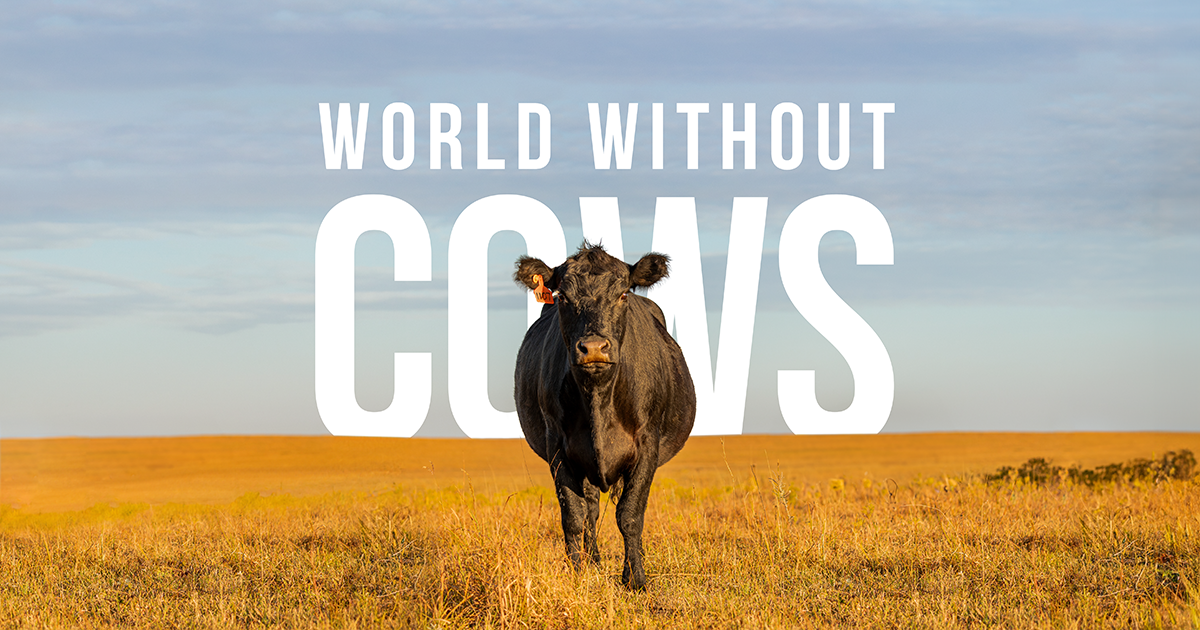
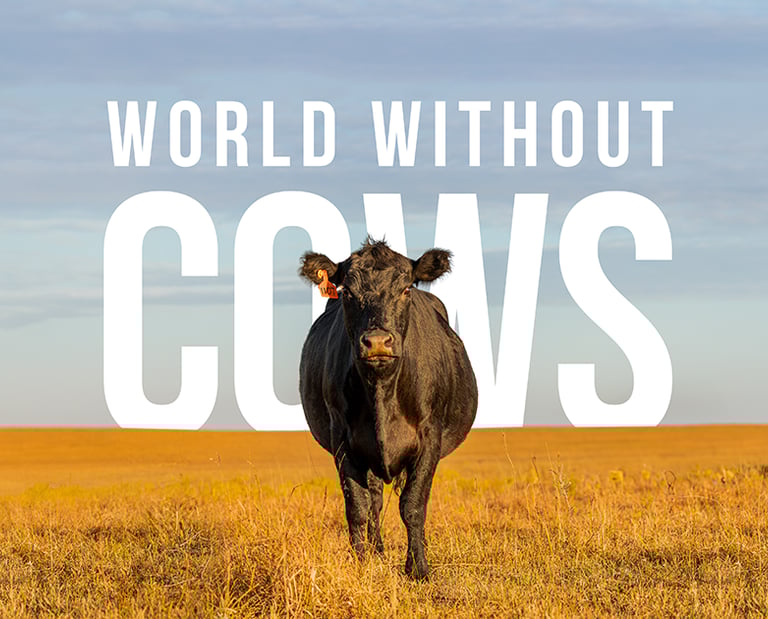
A World Without Cows: What happens when we optimise the wrong variable?
The film World Without Cows (https://worldwithoutcows.com/?) asks a deceptively simple question: “what would the world look like if cows disappeared?” It’s based on a white paper that appeared in Nutrition (https://www.livestockresearch.ca/uploads/cross_sectors/files/A-World-Without-Cows-Imagine-Waking-Up-One-Day-to-7.pdf) – the story is worth reading (https://worldwithoutcows.com/cows-disappeared-scientific-paper-film/)
It’s an emotionally charged premise because cows sit at the intersection of so many modern tensions - climate, land use, food security, rural livelihoods, nutrition, culture, and identity. But what makes the film valuable is not that it defends cattle uncritically, or dismisses the environmental case against them. It highlights something more important: the risk of treating complex food systems as if they have single-variable solutions.
In a moment where “remove the cow” is sometimes presented as a shortcut to sustainability, World Without Cows pushes back with an uncomfortable reminder: systems don’t behave like spreadsheets.
And food systems rarely reward simplification.
The temptation of the clean narrative
Food sustainability debates often gravitate toward clean, binary stories:
cows are bad
plants are good
methane is the problem
replacement is the answer
That narrative is emotionally satisfying because it offers clarity. But it can also become a trap. Because the real question is not whether cows have impact. They do. The question is what happens after we remove them - and whether the “solution” creates second-order consequences that are worse than the original problem.
This is where the film’s premise becomes useful: it forces us to consider the system response, not just the headline metric.
Behaviour change is a weak lever. System design is the power lever.
One of the biggest mistakes in sustainability strategy is assuming consumers will change first.
Eat differently.
Pay more.
Accept unfamiliar textures and ingredients.
Rebuild habits.
But public health already tells us how this goes: if people won’t reliably change their diet to improve their own health, it’s unrealistic to expect them to change it to reduce emissions - especially under cost pressure.
So if the goal is real-world impact at scale, the solution can’t depend on everyone making perfect choices every day.
It has to come from upstream changes that make the default food system work better - without requiring the public to become different people.
That is why we focus on system change, not food ideology.
Replacement strategies often fail because they introduce friction
The film indirectly exposes another commercial reality: even when the sustainability case for “cow-free” food is strong, replacement is hard to execute at scale. Because replacement strategies often come with high friction:
new supply chains
new processing requirements
new sensory compromises
new approval cycles
higher costs
unfamiliar ingredients and consumer scepticism
In practice, reformulation doesn’t fail due to lack of ambition. It fails because it introduces too much disruption into systems already under pressure.
That’s why “low-friction reformulation” matters: ingredients and approaches that reduce emissions, cost, and risk without breaking manufacturing reality.
A world without cows still needs protein, function, and affordability
Remove cows, and you don’t just remove emissions.
You remove a huge amount of:
high-quality protein
functional fat systems
nutrient density
agricultural value creation
rural economic stability
The question then becomes: what fills the gap?
Not in theory - in supermarkets, school meals, hospitals, and mainstream ready meals. At price points that normal households can afford.
And this is where many “cow-free” narratives become fragile: they assume the alternative system is already built, already scalable, already affordable, and already trusted.
It isn’t.
The better question: how do we reduce impact without breaking food?
This is why the most scalable sustainability strategies in food are rarely ideological. They are operational.
They focus on efficiency - using what we already grow more effectively - so that sustainability becomes a by-product of better system design.
At UPP, our work is built around that principle: using under-utilised vegetables and side streams and converting them into functional protein and fibre ingredients that integrate into mainstream manufacturing.
Not because consumers want to “eat side streams”.
But because the system is wasting nutrition at scale - and importing ingredients to replace functions that already exist in-field.
Waste is not a moral failure. It’s a design failure.
Hybridisation beats disruption: the fastest route to real impact
One of the most practical outcomes of the “world without cows” thought experiment is this: you don’t need total elimination to create meaningful change.
You need partial displacement at high volume.
That’s why we believe in ingredient stacking and hybridisation - not as a consumer trend, but as a systems strategy.
For example:
reducing meat inclusion in processed foods while maintaining taste and affordability
increasing nutrition density by adding vegetable-derived protein and fibre
improving texture and yield without additive-heavy formulation
This is not “anti-meat”. It’s pro-efficiency.
It reduces emissions faster because it fits inside existing buying behaviour and existing manufacturing.
Quiet change beats loud disruption.
The film’s real message: beware single-variable optimisation
World Without Cows is ultimately a warning against solving food sustainability by removing one component and assuming the rest of the system will self-correct. The interview with the film makers is worth watching: https://worldwithoutcows.com/the-making-of-world-without-cows
Because the food system is not a single problem.
It’s a network of constraints: nutrition, economics, labour, land, resilience, consumer trust, processing infrastructure, and supply chain risk.
If we optimise only for “remove cows”, we may unintentionally worsen:
nutrition density
affordability
land-use outcomes
reliance on imported, fragmented ingredients
food security and resilience
And we may still fail to deliver the climate gains we expect - because the replacement system carries its own footprint, frictions, and unintended consequences.
Closing thought: don’t aim for a world without cows - aim for a world that works
The most useful takeaway from World Without Cows isn’t that cattle are perfect, or that nothing should change.
It’s that the path to better food systems isn’t purity.
It’s practicality.
The food system will not decarbonise through moral pressure or consumer behaviour change. It will decarbonise when upstream design makes lower-impact food the easiest, cheapest, most reliable option — for producers, retailers, and households.
That is the work:
not removing cows to feel certain,
but redesigning systems to reduce waste, improve nutrition, cut Scope 3 emissions, and keep food affordable - at scale.
Progress that fits the system is the only kind that lasts.
Upcycling as Infrastructure: Why UPP Joined the Upcycled Food Association
For much of UPP’s development, we’ve worked quietly upstream — focused on harvest automation, processing infrastructure, and ingredient integration rather than labels, claims, or categories.
That hasn’t been accidental.
Our view has always been that the fastest way to improve nutrition and reduce environmental cost is not to ask consumers to change what they buy, but to change what goes into food - reliably, at scale, and without adding friction to systems that are already under pressure.
In that context, UPP’s decision to join the Upcycled Food Association is less about affiliation, and more about alignment.
Why “upcycled” fits UPP’s model - without changing it
The term upcycled food is often associated with consumer-facing products and on-pack certification. That’s not where UPP operates.
Our work sits earlier in the system: taking under-utilised crops and side-streams that already exist, and converting them into food-grade protein and fibre ingredients that integrate into mainstream manufacturing.
But at a system level, the logic is the same.
Upcycling is not about novelty. It’s about using what we already grow more effectively - before we grow more, import more, or extract more.
That principle has guided UPP from the start:
working with vegetables that are left in-field or diverted to low-value pathways
converting them into ingredients that displace globally sourced inputs
improving nutrition density while lowering embedded emissions
doing so at costs that work for real food producers
The Upcycled Food Association (https://www.upcycledfood.org/) exists to accelerate exactly that kind of system-level change - not by reinventing the food system, but by reconnecting its broken loops.
From fragmented effort to shared infrastructure
One of the persistent challenges in food sustainability is fragmentation:
Farmers optimise yields.
Manufacturers optimise processes.
Retailers optimise risk.
Consumers optimise price and familiarity.
Waste, emissions, and nutritional dilution tend to sit in the gaps between those objectives.
The Upcycled Food Association plays an important role by creating shared standards, language, and credibility around a simple idea: that waste is not a moral failure, but a design failure - and one that can be fixed.
For UPP, joining the Association is a way of contributing operational proof to that mission.
Not theory.
Not aspiration.
But infrastructure that works under commercial conditions.
Expanding the platform - including into California
While UPP’s current operations are anchored in the UK and Europe, our ambition has always been to build a replicable harvest-to-ingredient platform, not a single geography–bound solution.
California is a natural next step. It is one of the world’s most productive agricultural regions — and also one of the most constrained:
labour availability is structural, not cyclical
water and input efficiency are under scrutiny
food waste volumes are significant
nutrition and sustainability pressures intersect directly
These are exactly the conditions UPP’s system is designed for.
By engaging with the Upcycled Food Association’s network in the US, UPP aims to:
collaborate with growers and processors facing similar structural challenges
adapt our approach to crops and conditions specific to California
contribute to a broader ecosystem focused on nutrition, waste reduction, and commercial viability
ensure that expansion is grounded in existing supply chains, not built in isolation
This is not about exporting a finished solution. It’s about deploying a proven logic into a new context - carefully, collaboratively, and with local relevance
Improving nutrition without asking people to try harder
A consistent thread in UPP’s work - and one shared by the Upcycled Food Association - is realism about behaviour. If people won’t reliably change their diets to improve their own health, it is unrealistic to expect them to overhaul their food choices to save the planet.
That doesn’t make consumers the problem.
It makes system design the problem.
Upcycled ingredients, when done properly, allow nutrition to improve quietly:
more protein and fibre per bite
fewer imported, fractionated inputs
familiar foods made better upstream
No new habits.
No premium positioning.
No behavioural trade-offs.
That is how change actually scales.
Reducing environmental cost where it matters most
From an environmental perspective, the most meaningful reductions rarely come from offsets or end-of-chain claims. They come from using existing land, crops, and inputs more efficiently.
By turning under-utilised vegetables into ingredients that replace conventional alternatives, UPP’s model:
reduces waste at source
lowers the need for additional agricultural production
cuts transport and processing emissions embedded in global supply chains
creates verifiable Scope 3 reductions tied to operational change
The Upcycled Food Association provides a framework for recognising and accelerating these kinds of outcomes — grounded in evidence rather than marketing.
A shared direction, not a new identity
Joining the Upcycled Food Association does not change UPP’s role.
We remain an upstream, B2B ingredient platform.
We remain focused on low-friction reformulation.
We remain committed to designing within real-world constraints.
What it does signal is intent:
to participate in a broader, international effort to redesign food systems around efficiency rather than excess
to contribute practical infrastructure, not just ideas
to expand responsibly - including into California - in partnership with those already doing the work
Progress in food rarely comes from loud disruption. It comes from quiet alignment, repeated at scale.
That’s what upcycling looks like when it’s treated as infrastructure - and why this is a natural next step for UPP.


Ingredient stacking: the fastest route to lower-carbon food that still tastes like food
Most of the food industry’s sustainability debate still gets stuck in the same place: replacement.
Replace meat with plants.
Replace dairy with alternatives.
Replace “bad” ingredients with “better” ones.
The problem is that replacement strategies often come with high friction: new supply chains, new processing behaviour, new allergen complexity, new sensory problems, and – critically - new consumer compromise.
That’s why so many “climate-friendly” products struggle to scale. Not because the science is wrong, but because the system is real.
A more practical approach is emerging—one that fits the way food is actually made, bought, and eaten: ingredient stacking.
Not a new category. Not a new diet.
Just smarter formulation.
Ingredient stacking means combining ingredients so that each one contributes something different - nutrition, function, taste, cost efficiency, and lower embedded emissions - without forcing a total product redesign.
And because it works within existing food formats, it can deliver results faster, with lower risk, and at scale.
That is exactly the kind of low-friction change the food system needs right now.
Why replacement is slow - and stacking is fast
Reformulation rarely fails due to lack of ambition. It fails because it introduces too much disruption into already stressed operations: cost volatility, labour constraints, retailer scrutiny, and Scope 3 accountability all at once.
That’s why the highest-leverage ingredient strategies today aren’t the ones that promise “reinvention.” They’re the ones that deliver measurable change without breaking manufacturing reality.
Ingredient stacking does exactly that.
It doesn’t ask food producers to bet the product on a single hero ingredient.
It spreads performance across multiple familiar inputs - so the final product still behaves like food.
The basic idea: don’t swap one thing for another - combine them
Ingredient stacking is simple:
Example 1: beef + beans + broccoli fibre
Instead of a binary choice—beef burger vs plant burger—stacking gives a third option:
Beef delivers the flavour, texture, and consumer familiarity people already want
Beans contribute protein, fibre, and cost-effective bulk
Broccoli fibre improves nutrition density and can support texture, water-holding, and satiety
This isn’t about taking meat away. It’s about using less of the high-impact ingredient, while improving the overall nutrition and economics.
That matters because behaviour change is a weak lever. System change is the power lever.
Example 2: pea protein + broccoli protein
Plant protein products often struggle because they rely heavily on isolates and functional additives to hit texture and mouthfeel targets.
Stacking helps by combining:
pea protein (familiar, scalable, widely adopted)
broccoli protein (nutrient-dense, crop-derived, and aligned with a “sounds like food” ingredient story)
The result is a protein system that can be more balanced, less additive-dependent, and more explainable to consumers - without needing to invent a new eating behaviour.
Why stacking can cut GHG faster than “perfect” solutions
A lot of climate strategy in food gets stuck chasing the ideal endpoint.
But the atmosphere doesn’t reward idealism. It rewards tonnes of CO₂ removed now.
Ingredient stacking accelerates GHG reduction because it works through:
Partial displacement at high volume
You don’t need 100% replacement to create impact.
If you can reduce meat inclusion by 10–30% across mainstream products - while keeping taste and price stable - you can drive large reductions across a big base.
This is “quiet change beats loud disruption” in practice.
Lower-carbon nutrition density
The next phase of food is moving toward more nutrition per bite, not more calories per pound - especially as GLP-1 use expands and portions shrink.
Stacking protein + fibre (for example broccoli protein + broccoli fibre) helps deliver:
satiety
digestive tolerance
nutrient density
…without forcing consumers into niche diet products.
Better use of what we already grow
The fastest emissions reductions often come from using existing crops more efficiently, not growing new ones. A meaningful share of broccoli biomass never enters the food system - not because it isn’t nutritious, but because it isn’t economically integrated into downstream demand.
Stacking lets manufacturers turn under-utilised vegetable nutrition into functional ingredients that can replace imported, fragmented inputs - reducing emissions where they actually sit: upstream, in Scope 3.
Stacking also improves food - not just carbon
The sustainability conversation often forgets the obvious constraint: food still has to taste good.
Ingredient stacking improves palatability because it avoids forcing any single ingredient to do everything.
Instead, each ingredient plays a role:
animal protein provides flavour authenticity
legumes contribute body and protein
vegetable fibre improves bite, juiciness, and nutrition density
vegetable protein adds complementary amino acids and a cleaner “food-like” ingredient narrative
This matters because consumers aren’t rejecting sustainability - they’re rejecting trade-offs.
Stacking reduces the trade-offs.
Cost and consumer acceptance: where stacking wins
Sustainability that costs more rarely scales. The system is too price-sensitive. Ingredient stacking is commercially powerful because it can:
reduce reliance on volatile commodity inputs
replace expensive isolates or additive systems
improve yield and water-holding in processed foods
simplify formulations (fewer “chemistry-sounding” ingredients)
And crucially, it does this while keeping products familiar.
Familiarity scales faster than novelty.
Why ingredient stacking is “low-friction reformulation” in action
Low-friction reformulation isn’t about avoiding innovation. It’s about designing innovation around existing food systems—so adoption happens quickly, not eventually.
Ingredient stacking fits that logic because it tends to:
integrate into existing processes
reduce sensory risk
reduce the need for new consumer education
deliver measurable Scope 3 reductions through operational change, not offsets
It is pragmatic.
It is scalable.
And it is exactly how mainstream food actually changes.
Closing thought: The fastest decarbonisation strategy is the one that doesn’t feel like one
If the industry waits for consumers to choose radically different foods, progress will be slow.
But if manufacturers quietly improve everyday products -by stacking familiar ingredients in smarter ways - the system can shift quickly:
lower emissions
higher nutrition density
better taste
lower cost
less waste
more resilience
Not through disruption.
Through better design.
That’s ingredient stacking: a faster route to better food, built to scale in the real world.

Balanced Proteins: Quiet Scale Beats Loud Disruption
For years, the protein transition has been framed as a battle of replacement.
Replace meat with plants. Replace familiar foods with new formats. Replace existing supply chains with entirely new ones.
The problem is not ambition. It’s friction.
As the Balanced Proteins: State of the Category 2025 report makes clear, the most scalable progress in protein is not coming from asking consumers to change what they eat - but from changing what goes into the foods they already buy.
That distinction matters. Because behaviour change is a weak lever. System change is the power lever.
Balanced Proteins are not a compromise - they are an optimisation
Balanced Proteins sit deliberately in the middle of the protein spectrum. They combine animal protein with plant, fermentation-derived, or cultivated ingredients to reduce cost, emissions, and nutritional gaps - without sacrificing taste, familiarity, or performance.
According to the report, products that replace as little as 30% of animal ingredients already deliver measurable gains across:
Cost stability, as animal protein prices remain structurally volatile
Nutrition density, especially fibre — where 97% of children fall short of recommendations
Emissions, particularly when beef is partially displaced
Operational fit, by integrating into existing manufacturing and foodservice systems
This is not a future-facing hypothesis. It is already happening - quietly, at scale.
The market signal is clear: low friction wins
The strongest adoption signals in the category are not coming from niche retail launches. They are coming from places where performance matters most:
Institutional foodservice converting significant volumes of minced beef to balanced formats
Retailers pricing balanced products below conventional meat to drive trial
Manufacturers using ingredient-based blends to stabilise margins without retooling factories
The report estimates a $5.3bn US serviceable obtainable market today — equivalent to frozen pizza — with a total addressable market aligned to the full $250bn US meat sector.
That gap tells an important story.
This is not a demand problem. It is a deployment problem.
Why balanced proteins succeed where replacements stall
Across multiple chapters, the report returns to the same structural insight: products scale when they work with existing systems, not against them. Balanced Proteins succeed because they:
Preserve familiarity: format, flavour, and cooking behaviour stay the same
Reduce risk: no new allergens, no exotic supply chains, no speculative infrastructure
Improve economic: partial displacement lowers input cost and volatility
Deliver nutrition quietly: fibre, protein, and micronutrients improve without consumer effort
This mirrors a broader lesson we see across reformulation, clean label, and sustainability work:
The fastest-scaling changes in food are rarely the most visible ones.
Partial change, massive impact
One of the most important contributions of the Balanced Proteins framework is reframing impact.
The atmosphere does not care whether a product is 10% better or 100% transformed. It only cares about tonnes of CO₂ avoided.
Balanced Proteins unlock impact through:
Partial substitution at high volume
Use of familiar crops and ingredients
Integration into mainstream foods, not niche categories
Reducing beef content by 20–30% across widely consumed products delivers far more impact than perfect solutions that never scale.
Quiet change beats loud disruption.
Nutrition per bite is becoming the real constraint
The report also lands at the same conclusion emerging elsewhere in the food system:
As portions shrink - due to ageing populations, cost pressure, or GLP‑1 use - nutrition density matters more than ever.
Foods optimised for volume and calories fail when people eat less.
Balanced Proteins respond to that reality by:
Adding fibre where diets are deficient
Maintaining protein quality and quantity
Improving satiety without increasing portion size
Avoiding ultra‑fractionated additive stacks
This is not diet food. It is better everyday food.
From proof‑of‑concept to proof‑of‑category
The final message of the State of the Category report is not technological - it is strategic.
Balanced Proteins do not need reinvention. They need normalisation.
That requires:
Clear category framing
Ingredient platforms that integrate upstream
Co‑manufacturing capacity
Retail and foodservice partners willing to lead
Capital aligned with infrastructure, not hype
In other words: proof‑of‑category, not proof‑of‑concept.
The opportunity ahead
Balanced Proteins are not a trend. They are a correction.
A correction to a food system that over‑optimised for volume. A correction to climate strategies that rely on behaviour change. A correction to innovation models that mistake novelty for impact.
The category’s strength lies precisely in what makes it unglamorous:
Familiar foods
Familiar systems
Familiar buying behaviour
Made better upstream.
That is how change actually scales.


Smart hybridisation: How to scale impact before you scale volume
In food, “hybrid” is often framed as a product trend: part meat, part plant. But hybridisation is bigger than that. It’s a commercial strategy. It’s a way to scale a new ingredient into the mainstream without asking the market to take a leap of faith.
At early scale, the mistake most ingredient businesses make is trying to behave like a mature supplier too soon: chasing broad distribution, wide SKU coverage, and long tail customers before the product has earned its place in the system.
A smarter approach is hybridisation as a go-to-market strategy: blending focus with reach, direct sales with ecosystem influence, and proof points with scalable routes.
Because at our current scale, our advantage isn’t reach. It’s relevance.
This is how we turn relevance into adoption — and adoption into scale.
The problem with “distribution-first” thinking
Distribution looks like the obvious answer when you want growth. More customers, more listings, more visibility. But for early-stage ingredients, distribution-first often creates the wrong outcomes:
you get listed but not used
you become a SKU instead of a solution
you lose the technical narrative to a portfolio manager
you get squeezed on price before you’ve proven value
you end up competing on availability, not performance
In other words: you gain reach, but lose control.
And for a new ingredient platform, control matters — because adoption is rarely a procurement decision first. It’s an NPD decision. A technical decision. A risk decision.
So the goal early on is not maximum reach.
It’s maximum pull.
Three pillars of a smart hybridisation strategy
#1 Direct sales to a small number of high-value customers
At early scale, direct selling isn’t a constraint - it’s a strategic advantage.
Direct relationships allow us to: Control the technical and innovation narrative around our ingredients. Not “here’s a spec sheet,” but “here’s how this solves your reformulation, nutrition, and cost problem.”
Work with NPD and nutrition teams, not procurement alone: Procurement can only buy what the system already understands. NPD can adopt what the system needs next.
Capture full value - product and technical input: Early customers aren’t just buying an ingredient. They’re buying speed, iteration, and application support.
Iterate quickly as we refine specs, formats, and applications: The fastest learning cycles come from tight feedback loops, not wide distribution.
Early collaboration creates stickiness: Because once your ingredient is designed into a product and validated in production, it stops being optional. It becomes infrastructure.
#2 One to two anchor customers as market proof points
Every scaling ingredient business needs proof - not in theory, but in the real world. Securing 1–2 credible anchor customers should be a priority because they do something distribution cannot:
They turn a “new ingredient” into a de-risked decision. Anchor customers enable us to:
Co-develop applications: This is where real lock-in happens. If we help build the format, we become part of the system.
Create volume stability and operating validation: A new ingredient doesn’t just need demand — it needs repeatable manufacturing, predictable performance, and consistent outcomes.
Provide reference credibility: A strong anchor case study shortens every future sales cycle. It answers the question every buyer asks quietly: “Has anyone like us made this work?”
In practice, one credible proof point is worth more than ten speculative conversations.
Examples of the right kind of anchors are businesses such as Tier 1 Producers - not because of brand glamour, but because they are operationally real: high-throughput, high-standards, and deeply embedded in mainstream consumption.
These are the customers that don’t just buy ingredients. They validate them.
#3 Ecosystem pull-through: create demand before distribution
The third pillar is the one most companies underestimate: influence.
Alongside direct sales, we should invest in “pull-through” across the wider food innovation ecosystem, including:
product developers and technical consultants
nutritionists and formulation specialists
co-manufacturers and pilot plants
accelerators, incubators, and innovation hubs
Why? Because ecosystems decide what becomes “normal.”
When your ingredient becomes a trusted reference point in these circles, you create a powerful shift:
Customers start asking for you by name.
That changes everything.
It changes the sales motion from persuasion to response.
It changes the commercial dynamic from “please list us” to “we need access to this.”
And when that pull exists, distribution becomes what it should be: a scaling tool, not a discovery tool.
Why this matters commercially
This hybridisation strategy is not just “nice positioning.” It’s margin protection and leverage-building in a market that punishes weakness. It allows us to:
Protect margin during low-volume phases
Early pricing should reflect value and support, not commodity expectations.
Avoid being deprioritised inside distributor portfolios
Distributors are built to sell what already moves. New ingredients are often side-lined unless demand is already proven.
Build leverage before negotiating distribution
When you arrive with pull-through and proof points, you negotiate from strength.
Enter distribution at the right time
Not because you need validation, but because you need logistics and scale.
In short: we earn distribution.
We don’t depend on it too early.
Closing thought: scale is an outcome, not a starting point
The fastest way to lose momentum is to chase scale before you’ve built certainty.
Smart hybridisation is about sequencing:
direct sales to learn and embed
anchor customers to prove and stabilise
ecosystem pull-through to create demand
distribution to scale what already works
This is how you scale adoption before you scale volume.

Europe after peak: why the next era of food is about nutrition density, not volume
For most of our lives, the direction of travel has felt obvious.
More people.
More consumption.
More throughput.
Food systems were built in the shadow of expansion - scaling output, optimising for calories, and growing capacity to keep up with demand. The assumption was rarely questioned because the numbers kept rising.
But in Europe, that era is ending. Eurostat projects the EU-27 population will peak in 2026 and then begin a long, gradual decline. Meanwhile, Europe as a whole is already past peak population, with demographic momentum now shifting toward decline and ageing.
That matters because population growth has always been the quiet engine behind food demand. When the number of mouths stops rising, the fundamentals change.
Europe is now moving beyond peak food requirement - not in the sense that food becomes less important, but in the sense that the strategic challenge is no longer “how do we produce more?” It becomes: how do we nourish better, with less waste, less environmental cost, and more resilience?
The end of “more” - and the start of “better”
Peak population doesn’t mean food demand collapses overnight. But it does mean the growth story weakens, and a different set of pressures takes over.
Instead of expansion, Europe is entering a period defined by:
Ageing populations: Older consumers typically need food that supports muscle retention, metabolic health, digestion, and nutrient adequacy — often with smaller appetites.
Rising obesity and diet-related disease: Europe is now grappling with overconsumption and under-nutrition at the same time: too many calories, not enough fibre, protein, and micronutrient density.
Higher scrutiny of how food is made: Consumers and regulators are paying more attention to processing, ingredient lists, and whether modern food is optimised for health or just industrial convenience.
National food security and supply chain risk: The question isn’t just “can we feed everyone?” It’s “can we feed everyone reliably, affordably, and domestically enough to be resilient?”
In short: Europe’s food challenge is shifting from volume to nutritional quality, lower environmental impact, and security of supply.
Why “nutrition per bite” becomes the new metric
When growth was the dominant context, the food system optimised for:
cost per calorie
stable supply at scale
palatability and convenience
maximum yield from industrial processes
That model helped deliver abundance. But abundance has side-effects - and in a post-peak Europe, those side-effects become impossible to ignore.
As appetite declines (through ageing, lifestyle shifts, and even the rise of GLP-1 medications), smaller portions expose a big weakness in the current system: many foods are calorie-dense but nutritionally thin.
So the future isn’t just “less food.”
It’s more nutrition in the food we already eat.
That’s a fundamentally different innovation agenda.
The mistake: assuming consumers will change first
When the food system is under pressure, it’s tempting to put the burden on the public:
Eat differently.
Buy differently.
Pay more.
Learn new ingredients.
But behaviour change is a weak lever.
If people won’t reliably change their diets to improve their own health, it’s unrealistic to expect them to overhaul how they eat to reduce carbon emissions.
Which means the highest-leverage changes are upstream:
reformulating everyday foods
improving nutritional density quietly
reducing reliance on imported and fragmented ingredients
cutting waste and emissions at source
That is where system-level change actually scales
Post-peak Europe needs a different kind of food innovation
In an expanding world, the logic was often: grow more, process more, ship more.
In a post-peak Europe, the logic becomes: use what we already grow better.
That’s where UPP fits.
UPP’s model is built around a simple but powerful shift: capturing under-utilised vegetables and converting them into functional protein and fibre ingredients that integrate into mainstream manufacturing.
This matters because Europe’s future food priorities aren’t abstract. They’re practical:
higher protein and fibre intake without asking consumers to “try harder”
lower embedded emissions through better Scope 3 performance
less waste and better utilisation of domestic crops
reformulation that works inside existing factories, not just in innovation labs
From volume to value: low-friction reformulation
In the next era, the winners won’t be the companies with the most radical ideas.
They’ll be the companies that make change adoptable.
Because reformulation rarely fails due to lack of ambition — it fails due to friction:
manufacturing disruption
procurement risk
allergen and regulatory complexity
uncertain supply at scale
sensory uncertainty
That’s why low-friction reformulation is becoming a strategic requirement, not a nice-to-have. UPP’s approach is designed around that reality: ingredients that work in real processes, at real scale, with real commercial constraints. Sustainability isn’t the goal - it’s the outcome
One of the most important shifts in a post-peak Europe is that sustainability can no longer be treated as a premium add-on.
It has to be built into efficiency.
When you reduce waste, shorten supply chains, simplify ingredient systems, and increase nutrition density, sustainability becomes a by-product of doing things better — not a marketing narrative that depends on consumer sacrifice.
This is what “future-proof” looks like in European food:
less waste
lower carbon
higher nutrition density
more resilient supply
no behavioural trade-offs required
Food security becomes a design constraint, not a political slogan
As Europe moves into demographic decline, it would be easy to assume food security becomes less relevant. In reality, it becomes more relevant - because food security is not only about demand. It’s about fragility. Global supply chains can be efficient, but they can also be brittle. And as volatility becomes structural, Europe will increasingly value:
regionally anchored inputs
predictable supply
traceability and compliance
domestic resilience
UPP’s focus on under-utilised crops and regional supply logic aligns directly with that direction of travel.
The next phase of food in Europe
For decades, the food system has been running an “expansion playbook.”
Europe is now entering a different chapter: one where population growth is no longer the default context, and where the priorities are shaped by ageing, obesity, scrutiny, sustainability, and security.
This is not a crisis. It’s a reset.
And it changes the definition of success.
The future of European food provision won’t be won by producing more volume. It will be won by delivering:
more nutrition per bite
less environmental cost per kilogram
more resilience per supply chain
UPP exists for exactly that future — improving food by changing what goes into it, not by demanding consumers become different people.
Quiet change. Upstream. At scale.
The system isn’t broken. It’s optimised.
There’s a popular narrative in food innovation that today’s food system is “broken” - too processed, too complex, too fragile, too far from nature.
It’s a satisfying story because it creates a clear villain and an easy solution: tear it down and build something new.
But that’s not how food works at scale.
The truth is simpler, and more respectful of reality:
The food system is optimised for affordability, safety, and scale - and those constraints shape ingredient choices.
If you want to change the outcomes, you need to start by understanding the optimisation.
Optimised for affordability
Affordability isn’t a marketing preference. It’s a social requirement.
Most food is purchased under pressure: time pressure, budget pressure, and often energy pressure. The system has been engineered to deliver calories, protein and convenience at a price that works - and that achievement is easy to overlook from the outside.
It’s also why certain ingredients dominate: they’re available, stable, predictable, and competitively priced across huge volumes.
Optimised for safety
Food safety is one of the greatest engineering successes of modern society.
In a world where products travel long distances, sit on shelves, cross borders, and enter millions of homes, safety has to be designed in - not wished for.
That reality shapes everything: manufacturing processes, specifications, microbial targets, packaging formats, shelf-life expectations, and the ingredient toolkits that make those outcomes possible.
Optimised for scale
Scale isn’t a “nice to have”. It’s what turns a good idea into something that actually feeds people.
When a manufacturer makes a product, they’re not making one batch for a launch event. They’re making thousands of tonnes with consistency, week after week, with minimal downtime and minimal variability.
That is why “perfect on paper” ingredients often fail in practice: they can’t handle the manufacturing environment, or they can’t be supplied reliably, or they introduce a new operational risk that no one asked for.
This is the heart of why change is hard - not because manufacturers don’t care, but because the system has been built to prioritise the things that keep food available and safe.
And it works.
The system delivered. Now the optimisation target is shifting.
It’s worth saying clearly: Manufacturers have delivered extraordinary safety, shelf life and affordability at scale.
That’s not the problem.
The problem is that the optimisation target is evolving.
Today, the system is being asked to deliver more, simultaneously:
Nutrition density, without changing formats people already buy
Resilience, in the face of climate and commodity volatility
Sustainability outcomes, without green premiums
Simpler labels, without sacrificing functionality
Stable supply, without adding complexity or risk
And the hardest part is this: the system can’t deliver those upgrades if the only options require a full redesign.
That’s why the next era of food innovation won’t be defined by disruption.
It will be defined by upgrade paths.
Why “disruption” is the wrong tool for food
Disruption works best when you can swap a system quickly.
Food doesn’t swap quickly.
Food has:
qualification cycles
sensory expectations
retailer specifications
regulatory requirements
global supply constraints
production lines designed for specific behaviours
brands built on consistency
So when innovation arrives with a message like “start over,” the response from incumbents isn’t resistance - it’s risk management.
Because in food, risk isn’t abstract. Risk is:
line downtime
product returns
quality escapes
allergen exposure
delistings
margin erosion
supply interruptions
That’s why the most scalable change tends to look “boring” from the outside.
It doesn’t ask the system to become something else.
It helps the system become better at what it already does.
The opportunity: incremental improvement that compounds
The most powerful improvements in food are often small per unit, but massive in aggregate.
A modest change repeated across high-volume products becomes meaningful:
a little more protein here
a little more fibre there
a slightly simpler ingredient list
fewer functional crutches
a more resilient supply input
a lower-footprint component in a familiar format
No single change needs to be perfect.
It needs to be compatible.
Because compatibility is what unlocks scale.
And scale is what unlocks impact.
What collaboration looks like in practice
At UPP, we don’t see ourselves as disruptors of food manufacturing.
We see ourselves as collaborators with it.
That means designing ingredients and supply models around the realities manufacturers face, including:
Compatibility over reinvention
Innovation doesn’t have to mean new product formats.
In many categories, the biggest wins come from improving the ingredients inside the products people already buy — without asking consumers to behave differently.
De-risking over disruption
A great ingredient isn’t just nutritionally interesting. It has to be:
consistent
specifiable
manufacturable
scalable
supported with documentation
resilient in supply
This is the difference between “promising” and “deployable.”
Supporting existing manufacturing
Food factories are highly tuned systems.
When you introduce an ingredient, you’re not just changing a recipe — you’re interacting with:
hydration behaviour
mixing and shear
thermal stability
shelf-life performance
texture development
yield and cook loss
cost-in-use
Real-world reformulation succeeds when it respects those constraints.
That’s why we focus on being a practical upgrade: a way to improve nutrition and resilience without raising complexity.
A better framing for the future: upgrade the system we have
The future of food won’t be won by the loudest manifesto.
It will be built by teams who can deliver change that works in the real world:
in procurement
in QA
in manufacturing
in NPD
in retailer conversations
in consumer repeat purchase
That’s not a compromise.
It’s the only route to scale.
So instead of asking whether the food system is broken, a better question is:
What is it optimised for — and what should it be optimised for next?
Affordability, safety, and scale will always matter.
Now the next layer is clear: nutrition, resilience, and efficiency — delivered through incremental improvements that the existing system can actually adopt.
That’s the upgrade path.
And that’s the work.
Make Sustainability a By-Product of Efficiency: How Smarter Food Systems Outpace Traditional “Green” Narratives
In the global race to reduce greenhouse gas emissions and build food systems that nourish a growing population, the biggest breakthroughs won’t come from ideological purity - they’ll come from operational excellence. At UPP, sustainability isn’t a slogan, it’s a consequence of doing things better, smarter, and more efficiently. That’s the insight at the heart of a new paradigm: making sustainability a by-product of efficiency.
Let’s unpack why this perspective matters — and what it means for nutrition, cost, and climate impact.
Efficiency First: The True Engine of Lower Emissions
Too many sustainability strategies start with what we should avoid - meat, dairy, methane, monocultures - and only then ask how we replace it. But this kind of substitution strategy often:
Disrupts supply chains
Raises costs
Imposes cognitive load on consumers
Requires behaviour change
Delays real climate action
Contrast that with efficiency-led strategies: improve a system that already exists, reduce waste, and capture lost value.
Food is already produced at massive scale. Changing how we optimise that production - rather than tearing it down - delivers measurable greenhouse gas reductions now, not someday.
At UPP, this means transforming unused plant biomass - like broccoli side streams - into high-quality protein and fibre ingredients. These ingredients:
Slot directly into existing food formulas
Reduce reliance on high-impact proteins (like imported soy)
Improve nutrition density
Lower cost and carbon footprint
Because the ingredients integrate within existing products - they help manufacturers hit sustainability targets without reinventing their portfolio. That is sustainability as a by-product of doing the job smarter.
Efficiency Minimises Waste — Which Reduces Emissions
One of the biggest contributors to agricultural emissions is inefficiency across the food system - from farm to fork. In a world where up to ~30% of food is lost or wasted, inefficiency is literally burning emissions.
UPP’s approach tackles inefficiency by:
Capturing side streams that otherwise rot and emit methane
Producing ingredients that reduce the carbon per kilogram of food
Delivering back value to farmers instead of leaving biomass unharvested
The result? A tighter, value-retentive production flow that reduces both direct emissions and embedded carbon.
Efficiency Improves Nutrition and Consumer Acceptance
Too many “green” foods fall into a trap: they’re sustainable only if consumers adopt them. But if consumers don’t buy them because of taste, price, allergens, or unfamiliarity, the environmental logic collapses.
Efficiency-led solutions like UPP’s ingredients deliver both nutrition and palatability because they are formulated to work inside familiar foods. They aren’t mission-driven replacements - they’re performance-driven enhancers that:
Improve mouthfeel and texture
Enrich protein and fibre
Reduce overall product cost
Keep ingredient labels clean, simple, and familiar
This lowers the barrier to consumer acceptance, which is essential if sustainability gains are to scale.
Cost Efficiency = Sustainability at Scale
From national policy to global supply chains, the biggest obstacle to sustainable food systems is cost.
Efficiency reduces cost. And cost reduction increases adoption.
At scale, that dynamic is far more powerful as a climate lever than niche “sustainable” products that cost more, require new behaviour, or depend on subsidies
Efficiency means:
Lower production costs
Lower consumer prices
Lower marketing burden
Faster adoption across existing food portfolios
And through this, a dramatic reduction in Scope 3 emissions - the lion’s share of food system GHG impact - becomes feasible.
Make Sustainability the Outcome, Not the Ordeal
If we frame sustainability as a burden — something we must tolerate — we’ll always fight an uphill battle. But if we reframe it as a benefit of doing things better — then companies can integrate it directly into their core business strategy.
Efficiency is an internal metric. It is measurable. It has direct economic value.
When sustainability becomes a by-product of efficiency gains — improved raw material use, less waste, stronger supply chains, better nutrition, lower cost — that’s when the food system actually decarbonises at the speed the planet needs.
At UPP, sustainability isn’t a marketing campaign. It is a natural outcome of smarter design and engineering across the food value chain.

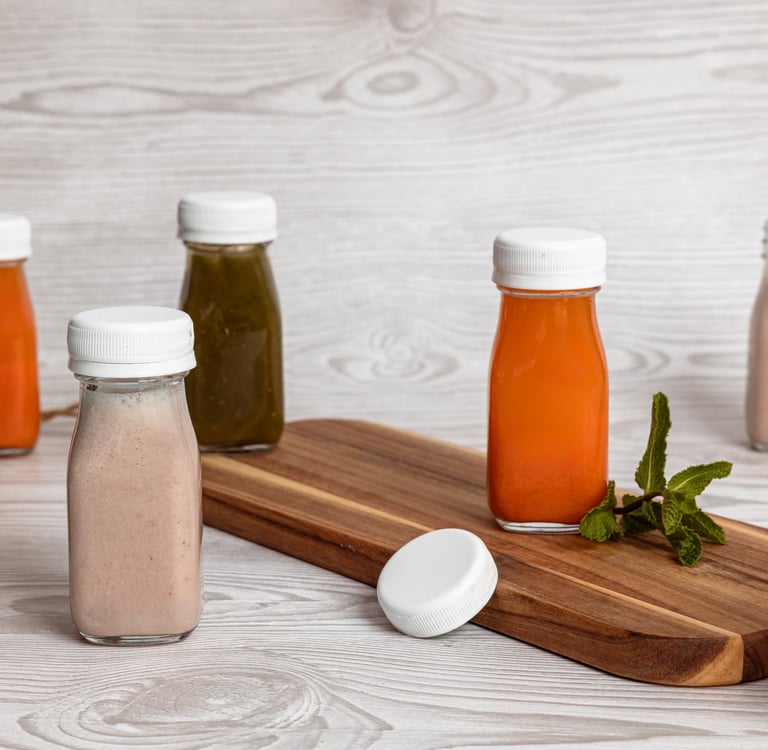
7 Rules for integrating sustainable protein ingredients at industrial scale
Why “sustainable protein” fails at scale
Over the past five years, food manufacturers have had no shortage of sustainable protein options. What they have struggled with is integrating those ingredients into existing production systems at scale - without destabilising cost, quality, or supply.
Most failures don’t come from nutrition or sustainability shortcomings. They come from integration friction: Unexpected formulation behaviour, audit complexity, volatile pricing, or supply chains that work at pilot scale but break under volume.
Based on repeated conversations with R&D, procurement, QA, and operations teams, a consistent pattern emerges. Successful adoption follows a small set of rules - largely independent of protein source or sustainability narrative.
Below is a practical framework for manufacturers evaluating or integrating sustainable protein ingredients into large-scale food production.
Rule 1: Start with inclusion economics, not headline cost
Ingredient cost per tonne is rarely the real constraint. Cost per functional unit at inclusion is.
Manufacturers should model:
realistic inclusion ranges (e.g. 4–20%)
yield impacts
offsetting reductions in other ingredients
downstream processing effects (hydration, viscosity, bake loss, etc.)
Sustainable proteins that appear expensive on a per-kg basis often outperform incumbents once inclusion thresholds and functional contributions are considered.
Buyer takeaway: ask suppliers for inclusion-based cost models, not price lists.
Rule 2: Demand drop-in behaviour — not reformulation heroics
At scale, reformulation time is risk. Ingredients that require:
new process steps,
bespoke equipment,
or narrow operating windows
rarely survive internal prioritisation once real factory constraints are applied. The most adoptable sustainable proteins are those that:
behave predictably across common processes,
tolerate normal production variability,
integrate into existing formulations with minimal change.
Buyer takeaway: “drop-in” isn’t marketing language - it’s operational risk reduction.
Rule 3: Treat food safety systems as a gating factor, not a checkbox
For enterprise manufacturers, sustainability claims are irrelevant if food safety systems do not align.
Procurement and QA teams typically require:
GFSI-recognised certification pathways (e.g. BRCGS, FSSC 22000),
documented allergen management,
traceability clarity,
and audit-ready documentation.
Ingredients that cannot pass supplier approval cleanly will stall — regardless of sustainability benefits.
Buyer takeaway: evaluate food safety maturity before pilot trials.
Rule 4: Prioritise supply confidence over novelty
Many sustainable proteins fail not because they don’t work — but because manufacturers cannot confidently forecast supply beyond early trials.
Key questions buyers should ask:
Is production modular and scalable?
Are feedstocks diversified and contractable?
What happens at 2× or 5× volume?
How does pricing behave under scale?
Novel processes can be compelling, but boring reliability wins procurement decisions.
Buyer takeaway: supply architecture matters as much as sustainability credentials.
Rule 5: Assume consumer acceptance is your problem - not the supplier’s
Even when ingredients are technically sound, consumer perception remains a risk owned by the brand.
Ingredients that are:
invisible in finished products,
label-compatible,
allergen-light,
and narrative-neutral
tend to integrate faster than those requiring education or explanation.
From a risk perspective, manufacturers consistently favour ingredients that enable sustainability improvements without altering the consumer experience.
Buyer takeaway: the best sustainability upgrade is the one consumers never notice.
Rule 6: Environmental claims must survive procurement scrutiny
Sustainability teams increasingly sit alongside procurement in supplier evaluations.
This means:
lifecycle analysis methodology matters,
boundaries and assumptions must be clear,
and claims must withstand internal challenge.
Manufacturers are wary of over-optimised marketing claims that collapse under diligence.
Buyer takeaway: credible, transparent environmental data beats bold but fragile claims.
Rule 7: Plan the commercial pathway, not just the pilot
Pilots are easy.
Commercialisation is not.
Before committing to trials, manufacturers should understand:
how long onboarding typically takes,
what qualification steps follow,
how contracts evolve post-trial,
and what scale-up looks like operationally.
Suppliers that can articulate this pathway clearly reduce internal friction and speed decision-making.
Buyer takeaway: clarity on “what happens next” is a competitive advantage.
What this means for manufacturers
Sustainable protein integration is no longer a question of if - but how safely and predictably it can be done.
Manufacturers that succeed tend to:
evaluate ingredients through operational lenses,
involve QA and procurement early,
and prioritise integration simplicity over novelty.
What this means for ingredient suppliers
The market is shifting from sustainability storytelling to execution credibility. Suppliers that win adoption are those that:
speak procurement language,
surface integration data early,
and design their businesses for manufacturer realities.
Closing note
This framework reflects how large food manufacturers actually assess risk - not how sustainability is discussed at conferences. As sustainable protein ingredients move from experimentation into mainstream supply chains, integration discipline will matter more than innovation alone. Speak to us to discuss our approach.
Get in touch
© 2026. All rights reserved.
Upcycled Plant Power ('UPP') Limited
trading as "UPP" and "Freya"
Company number: 14171122
VAT Number: 428 2222 17
Registered address:
Agri-Tech Centre
Poultry Drive, Edgmond,
Newport, Shropshire
United Kingdom TF10 8JZ
Connect with us
Broccoli is a natural source of vitamin K and contains folate, potassium and beta-carotene, a provitamin A carotenoid. Our Fiba and Prota products are a source of fibre, making them nutritionally valuable ingredients.